Lorem ipsum dolor sit amet, consectetur adipiscing elit Lorem ipsum dolor sit amet, consectetur adipiscing elit
Latest news from Packaging Innovations & Empack
Talking rubbish: Sparking real change in waste management
James Piper, co-host of the Talking Rubbish podcast, is on a mission to make recycling more accessible and engage listeners in meaningful conversations about sustainable waste management.

With over 15 years of experience in the recycling industry, James Piper has established himself as a passionate advocate for sustainable waste management. As the co-owner of Ecosurety, one of the UK’s largest packaging compliance schemes, Piper has worn many hats throughout his career. Starting as a graduate fresh out of university with a degree in biology, he quickly rose through the ranks, becoming CEO in 2016 and later a shareholder in 2020.
At Packaging Innovations & Empack 2025, Piper will take the stage for Talking Rubbish Live! – the first live episode of the Talking Rubbish podcast, which he co-hosts with Robbie Staniforth, Policy Director at Ecosurety. This special episode will feature an interview with William Connolly, Senior Principal Scientist at Diageo, exploring groundbreaking innovations for premium brands like Johnnie Walker and Baileys. The discussion will focus on balancing premium product design with recyclability, overcoming challenges in lowering carbon emissions, and the case for reuse and refill systems.
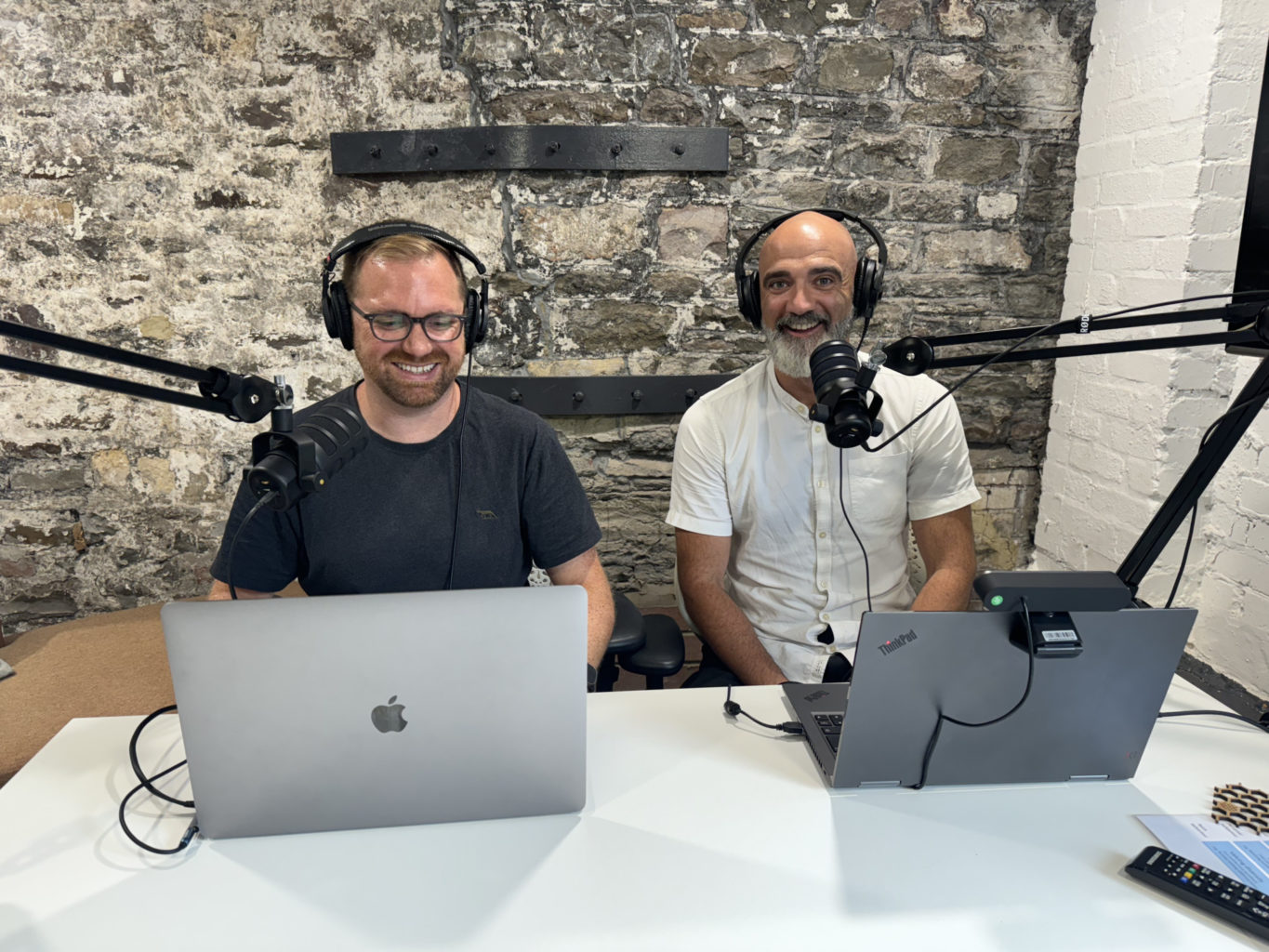
Piper’s expertise extends far beyond podcasting. During the COVID-19 pandemic, he authored The Rubbish Book, an accessible guide to help consumers understand recycling and proper waste disposal. Now, he serves as a non-executive at OPRL, the City to Sea chair, and remains Ecosurety’s co-owner, whilst serving on the board as a non-executive director.
But where did the idea to start a podcast come from, and where does James find the time?
“While travelling, I had the idea to start a podcast as a companion to the book,” he told Packaging Innovations. “I wanted to call it The Rubbish Podcast and envisioned having “rubbish guests” to talk about all things recycling. I even planned out about 100 episodes. My idea was to record the podcast with my wife as the layperson learning about recycling alongside me. But after returning from my travels, I shelved the idea – it just didn’t feel right at the time.
“Then, I started listening to The Rest Is… series, like The Rest Is History, The Rest Is Politics, and The Rest Is Entertainment. I realised what made those podcasts so successful was two experts chatting informally about a topic. That inspired me.
“At a board meeting for Ecosurety, I turned to Robbie and asked if he’d be interested in co-hosting a podcast with me. The idea was simple: two experts talking about a different recycling topic each week. Robbie was on board, and I decided to change the name to Talking Rubbish, which felt more compelling than The Rubbish Podcast.”
A mission to make waste management accessible
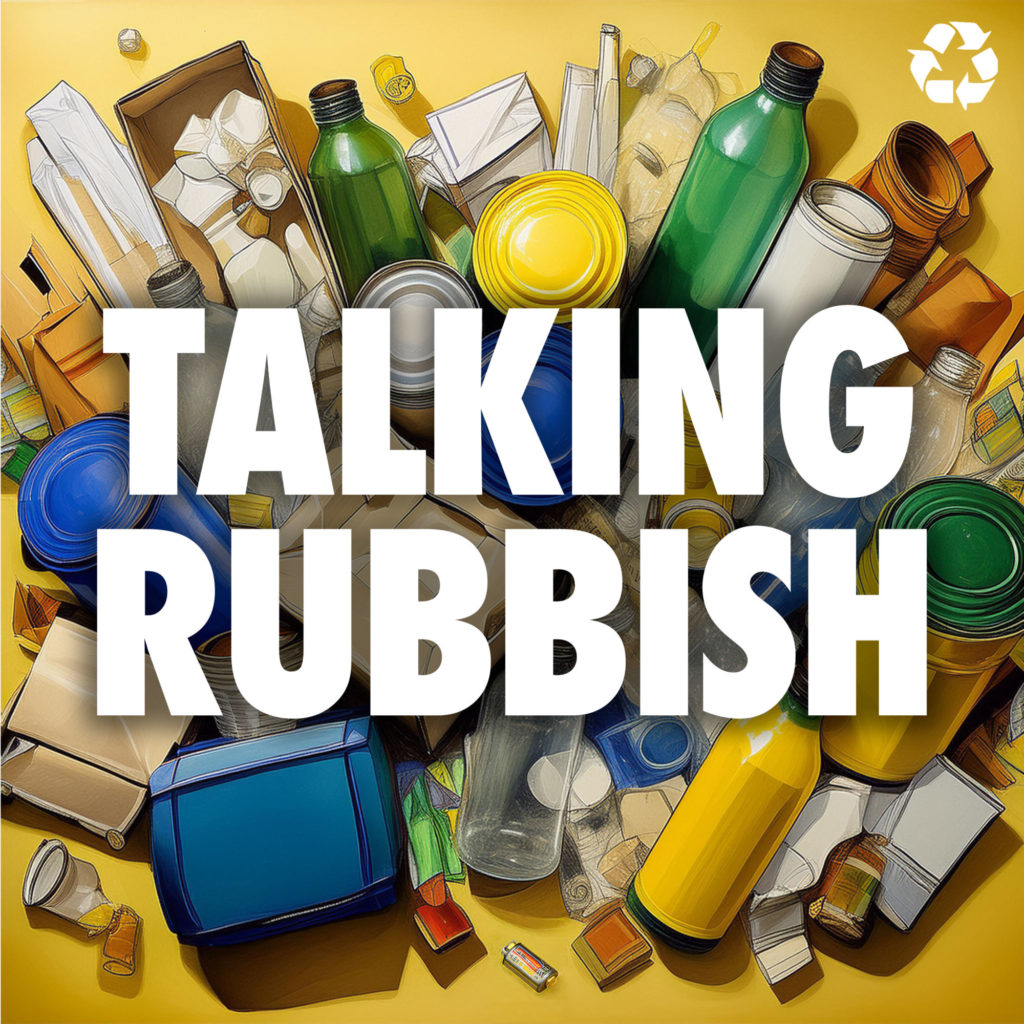
Within two weeks of that board meeting, James and Robbie had their first episode of Talking Rubbish published. They purchased microphones, recorded a rehearsal, and decided, “That’s good enough – let’s publish it!” In fact, their very first episode was that initial rehearsal. Since then, they’ve consistently released weekly episodes, now reaching their 28th.
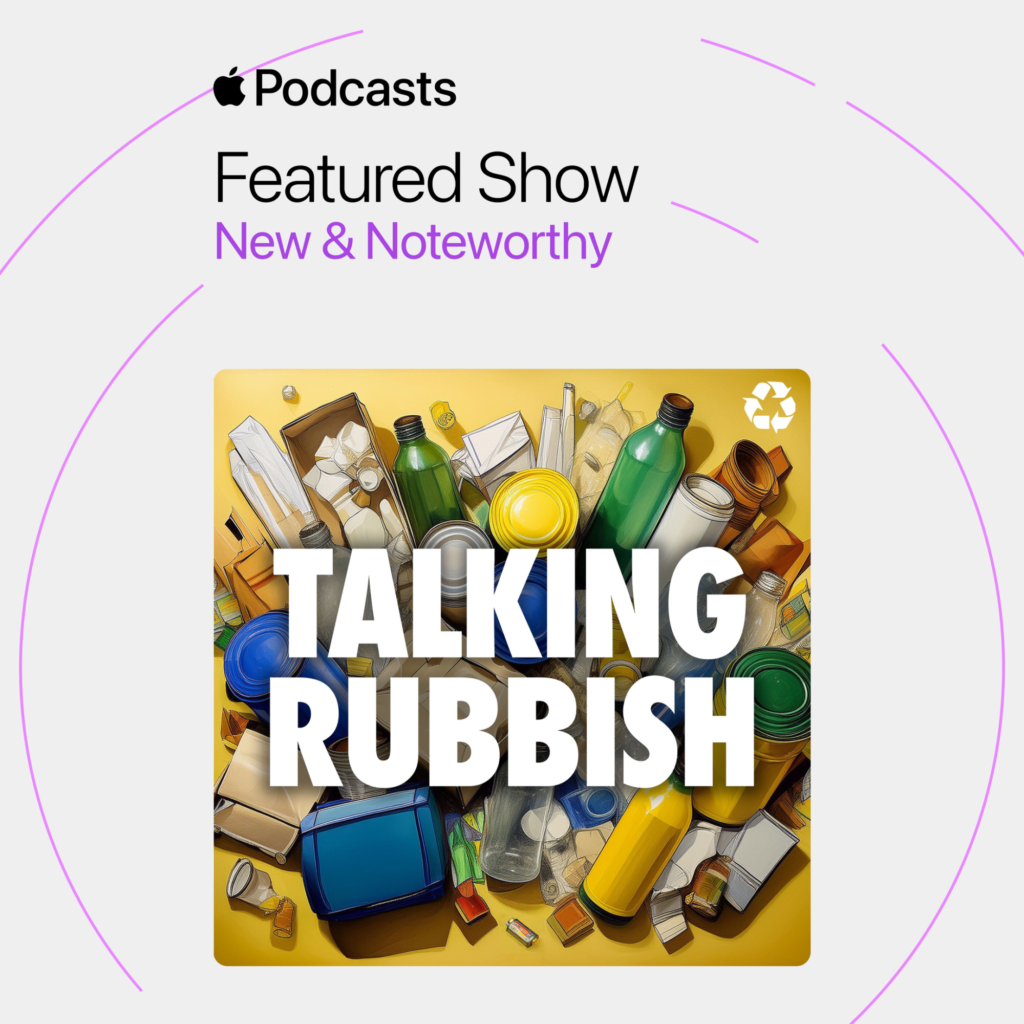
The podcast has grown rapidly, earning a place in the top 2% of podcasts worldwide, according to Listen Score. It was named Podcast of the Week by The Guardian, featured in The i and the Radio Times and received Apple’s New & Noteworthy recognition. The show has built a loyal listener base, with multiple people reaching out daily via WhatsApp, email, or the website to ask whether items are recyclable or to send photos of bins they have spotted in the wild.
“One popular segment of the podcast is Rubbish or Not, where we evaluate things like the new Pringles tube,” he added. “We also tackle big topics of the week and explain how recycling processes actually work. The public has really engaged with it, and unlike many podcasters we have spoken to, we don’t struggle to get interaction. People love talking about recycling!
“It’s been an amazing first six months. I’m so excited to see what’s next. This live event feels like the perfect next step.”
James has been pleasantly surprised by the audience Talking Rubbish has attracted. Initially, he envisioned the podcast as something that would appeal primarily to the “green and keen” – those already passionate about recycling and sustainability. However, it quickly became apparent that the podcast was resonating with a much broader audience.
Listeners include not only avid recyclers but also those who are simply curious about the subject and eager to learn more. This diverse appeal has helped the podcast grow rapidly, providing an accessible way for people of all knowledge levels to engage with important conversations about waste, sustainability, and the challenges of recycling. By bridging the gap between experts and everyday consumers, Talking Rubbish has succeeded in making the complex world of recycling more approachable and inclusive.
“There’s a lot of scepticism around whether packaging is actually recycled,” he added. “What I always say to people is, “Why would a council bother collecting something if they weren’t trying to recycle it?” Collecting items in separate bins costs money – both to collect and to process. The only way to recoup that cost is through recycling. Incineration and landfill come with gate fees, so they shouldn’t be the primary route for our waste.
When you start explaining the economics of how recycling works, people often become more engaged. Understanding the financial and practical realities behind recycling helps them see why it’s worth the effort to sort and recycle.”
Misinformation can spread easily, and James sees the podcast as an opportunity to address and clarify such issues. In a recent episode, for example, Talking Rubbish explored a study that claimed cooking with black plastic utensils could expose people to their daily allowance of a toxin called BDE. James and Robbie decided to investigate the study in detail to provide listeners with a clearer understanding of the findings and their implications.
“It turns out that the study involved leaving the plastic utensils in boiling oil for 15 minutes,” he continued. “Now, does anyone actually cook like that? Probably not. But even if someone did, the study claimed that 82% of our daily toxin exposure would come from those utensils. However, they’d made a calculation error – it was actually 8.2%.
“Despite this, when the study was first reported, it sparked a frenzy. Three million articles were published telling people to throw away their black plastic utensils. Later, when the error was corrected and it was revealed to be 8.2%, less than 10% of news outlets issued revised stories. The original researchers were even delisted from journal websites due to the inaccuracy of their study.
“So, you can assume that 90% of people who read those initial articles still believe the misinformation, while only 10% might know about the correction.”
This is why Talking Rubbish is such an important platform. It gives James and Robbie the opportunity to dive into stories like this, examine them critically, and share the truth with their audience. The podcast serves as a reminder to look beyond the headlines and approach these topics with a critical eye. At its core, the podcast aims to help listeners think more critically and gain a deeper understanding of the bigger picture surrounding recycling and sustainability.
Talking Rubbish now has over 240 5-star reviews across Spotify and Apple, which demonstrates that people are willing to engage with a more nuanced and truthful narrative, even when it challenges mainstream media portrayals. A great example is the podcast’s second episode, titled Why Coffee Pods Aren’t That Bad. While the title might seem divisive and potentially off-putting, it turned out to be a hit with listeners. Many have shared feedback calling it their favourite episode because it encouraged them to think differently and reconsider their assumptions.
“That’s really what we’re about – getting people to think,” said Piper. “We’ve also reached a point where people are reaching out to us about how we can play a bigger role. For instance, there’s interest in how we might help make and communicate decisions around Extended Producer Responsibility (EPR) and Deposit Return Schemes (DRS).
“We’ve grown into a strong voice for the public, and now it’s about figuring out how to use that voice effectively—whether it’s helping the government make better decisions or helping brands and retailers understand public attitudes toward different materials.”
A call for coordinated action
As the UK continues to grapple with the complexities of waste management and recycling, Piper has raised concerns about the government’s approach to legislation in the sector. With key measures like EPR), simpler recycling systems, and DRS all on the table, Piper emphasises the need for coordinated implementation. He warns that if these interconnected pieces of legislation are not enacted at the right time, the potential impact could be undermined, creating inefficiencies and missed opportunities. Piper advocates for a more decisive and transparent approach to ensure a system that works for both the environment and the people responsible for its execution.
“I’m worried that the pieces of legislation only work if they’re implemented correctly because they’re interconnected,” asserted Piper. “You need simpler recycling alongside EPR; otherwise, what’s the point? You’d have a finance mechanism but no efficient collection system. And if cans and bottles aren’t included in EPR, then you need DRS. The interplay between these pieces of legislation is crucial.
“In general, these legislative measures are very strong if they’re done right. But they’re bound to frustrate certain members of the industry. I am pleased to see action, but I’m frustrated by how long it’s taking. I think everyone is. The clarity we’re getting isn’t perfect, but it’s better than where we were.”
Piper believes it is crucial for the government to follow through on its commitments, release measures on time, and legislate boldly.
Educating and engaging
For Piper, sharing knowledge is at the core of everything he does. While the recycling industry holds a wealth of information, Piper observes that it often struggles to communicate effectively. His particular talent lies in simplifying complex concepts, a skill he attributes to his own preference for straightforward explanations.
Piper played a pivotal role in establishing Podback, the coffee pod recycling scheme, and the Flexible Plastic Fund. Both initiatives took potentially complicated models and transformed them into practical, well-funded programs with strong industry backing. Recognising this ability as one of his greatest strengths, he views sharing knowledge as his way of giving back.
“The podcast is about helping more people understand recycling and making the information accessible,” he told Packaging Innovations. “While tools like Recycle Now are fantastic, I felt there was a gap in the audio space – something for people to listen to on the go. Many existing recycling podcasts are industry-focused, created by and for professionals in the field. While there are some amazing ones out there, they often stay within that complex, technical environment. I wanted to bridge the gap.
“By simplifying the topics—like spending 10 minutes discussing whether Pringles tubes can be recycled – we make the subject engaging and accessible. People get really into it! We’ve even created a Discord community, where listeners send us pictures of bins. We have a whole “bin spotting” section where people share photos, and we discuss whether it’s a good bin or a bad bin. It’s fun, interactive, and fosters a community outside of the usual recycling industry bubble.”
As Piper reflects on the journey of Talking Rubbish, it is evident that the podcast has found its role in educating and engaging the public. “I realised I could dedicate my time and resources to helping consumers understand recycling better. And since I enjoy speaking about these topics, this medium felt like the perfect fit. I believe we made the right choice – it has grown into a strong brand with significant potential.”
Looking to the future, Piper has ambitious goals for the podcast. “In a year, I would love to be able to say, ‘We’ve reached 100,000 listeners.’ My vision is for Talking Rubbish to become a central communication platform, working in partnership with initiatives like Recycle Now and government campaigns to better inform the public about recycling and sustainability.”
Attendees at Packaging Innovations & Empack 2025 can experience Talking Rubbish Live! firsthand, where Piper and his co-host Robbie Staniforth will discuss the latest challenges and innovations shaping the recycling industry. It is clear that Talking Rubbish is more than just a podcast – it is becoming an influential platform for driving meaningful conversations about sustainable waste management.
Share this article


Lorem ipsum dolor sit amet, consectetur adipiscing elit Lorem ipsum dolor sit amet, consectetur adipiscing elit
Latest news from Packaging Innovations & Empack

Lorem ipsum dolor sit amet, consectetur adipiscing elit. Ut elit tellus, luctus nec ullamcorper mattis, pulvinar dapibus leo.