Lorem ipsum dolor sit amet, consectetur adipiscing elit Lorem ipsum dolor sit amet, consectetur adipiscing elit
Latest news from Packaging Innovations & Empack
The future isn’t a wonder material. It’s a better system

When systems begin to strain, innovation has a habit of stepping forward quietly, reshaping what once felt immovable. Across industries, the most complex challenges rarely yield to incremental change alone; they demand new ways of thinking, new materials, and new relationships between form, function and responsibility.
Packaging sits squarely in this space, where environmental pressure, performance expectations and consumer experience collide. Sustainability, in this context, is no longer a singular destination but an evolving landscape. It is shaped by advances in material science, reimagined structures, and a growing understanding of circularity as something lived, not theoretical. From the reinvention of familiar substrates to the emergence of entirely new ones, progress is increasingly defined by ingenuity that reduces impact while enhancing presence, protection and purpose.
This perspective took centre stage at Packaging Innovations & Empack in ‘The future of sustainable packaging’, presented by Material ConneXion. Led by Andrew Dent, Chief Materials Scientist at Material ConneXion, the session offers a global view of the material and process innovations already reshaping the packaging ecosystem. Drawing on cross-industry insight and real-world success stories, Andrew explored how new plastics, evolving natural fibres, lightweight protection and inventive structures and closures are proving that circular realities can deliver both environmental progress and powerful shelf impact.
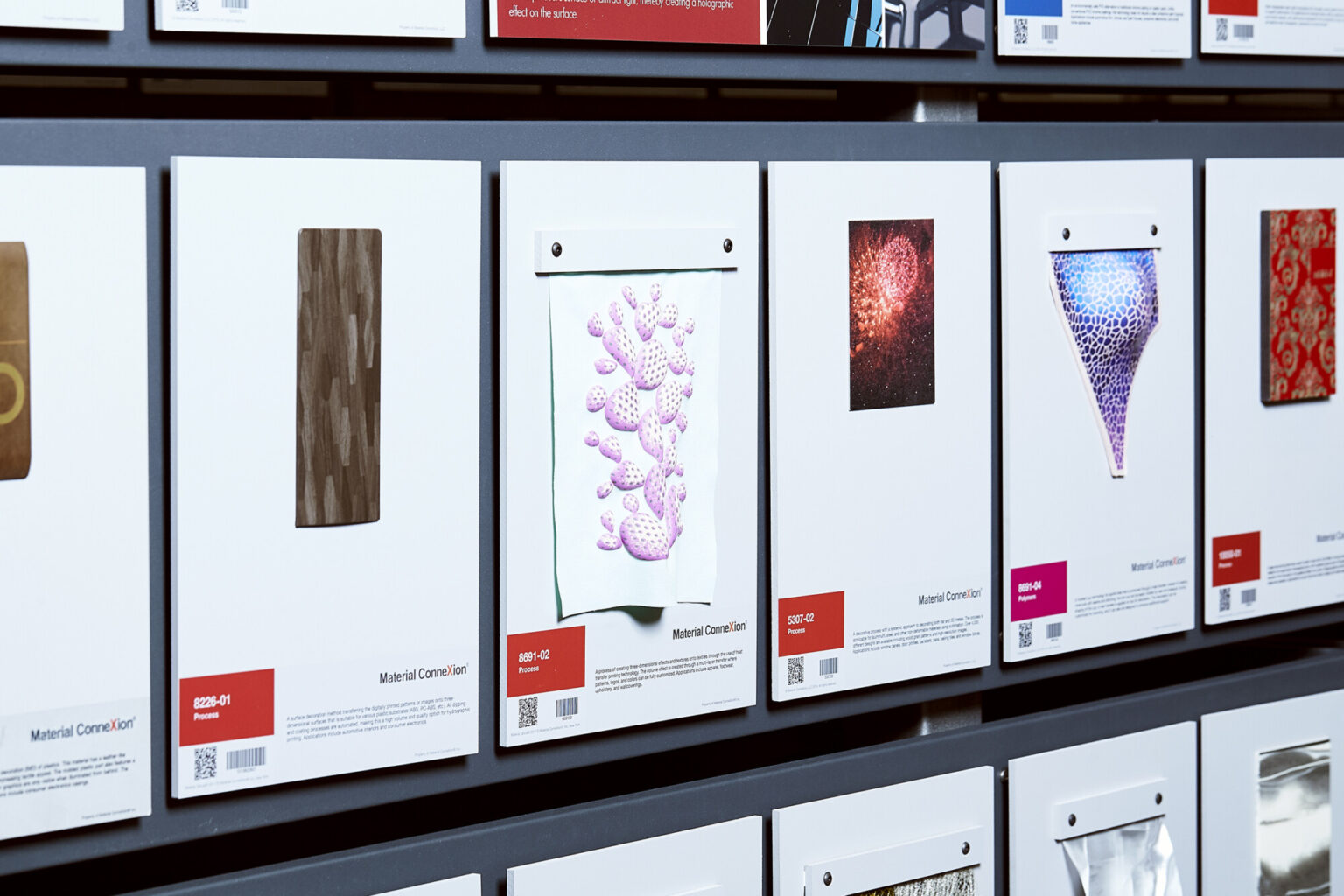
“I run a materials consultancy and library called Material ConneXion,” he explains. “We help brands and start-ups find innovative and sustainable materials. I’ve got a library here in New York City, and several other libraries around the world.” These libraries are not symbolic showrooms; they are working research environments. “Those libraries constitute a large number, 10,000 individual samples of various types of materials that are intended for packaging, but also for other industries as well.”
Packaging as the common thread
Material ConneXion’s scope extends far beyond packaging alone. The consultancy works across automotive, fashion, consumer electronics, furniture, sportswear, and other consumer-driven industries. Yet packaging remains a constant thread. “All of these industries need packaging,” Dent notes. “So inevitably, although we work with multiple different industries and disciplines, all of them are going to need some packaging in some way. So, we do have an awful lot of depth and understanding and knowledge about packaging.”
That depth has been built over decades. The company has been operating for around 30 years, with Dent himself embedded in its evolution for 25 of them. “I’ve got a team of researchers who help me source innovative packaging, sustainable packaging from a global reach,” he says. That global reach is fundamental to how Material ConneXion operates. With offices across Asia, Europe, and the US, Dent’s team is constantly scanning for innovation beyond familiar markets. “They’re doing research, helping me find the latest and greatest in terms of new materials, but also new printing processes, new manufacturing processes, new technologies, new ways of creating the best packaging we can find.”
Despite the rapid digitisation of design workflows, Dent is clear that material innovation remains resolutely physical. “Even though design is largely digital these days, the physical aspect is still crucial,” he says. “You cannot truly understand a material through a screen. You have to experience it in person. Packaging is always the first line of visual impact.”
Even as retail landscapes shift and physical stores decline, the moment of interaction remains critical. “The product still wants to have some impact when the consumer accesses it,” he explains, noting that packaging remains one of the fastest and most efficient ways to refresh a brand experience. “To change a piece of consumer electronics takes many, many hours, an awful lot of money and testing. Whereas with packaging, I can quickly update the look and feel of that first experience of a product with much less effort.”
Yet this power comes with responsibility. Packaging sits at the heart of the sustainability conversation precisely because of its scale. “We know that over half of the world’s plastic goes into single-use packaging,” Dent says. “Of that 400 million tonnes of plastic that we’re making every year, over 200 million tonnes of it is going directly into single-use packaging.” The implication is unavoidable. “We understand that there is an outsized need to rethink a lot of the packaging we’re producing, trying to find more sustainable solutions, trying to find reductions in environmental impact, trying to find ways to mitigate waste.”
This is where Material ConneXion’s research-driven approach becomes critical. Discovery does not happen in isolation. “We go to a lot of trade shows,” Dent explains. “I will be spending time at Packaging Innovations & Empack, presenting and exhibiting, but also researching and learning what other companies are doing.” Clients themselves also play a role, often bringing questions that spark new lines of inquiry. “If our clients have got some new ideas for packaging and they’ve been searching out new materials, we can talk to them and find out that way.”
But some of the most valuable insights come from outside a designer’s immediate frame of reference. “If you’re working in UK packaging, it’d be great to find solutions that are coming out of Japan or South Korea,” Dent says. “Maybe they’re using slightly different materials because their raw materials are different.” Paper is a perfect example. “We think about paper-based products, but of course, they have different types of paper. You’ve got Washi, and you’ve got Hanji in South Korea, made from mulberry fibres. So are there different ways of creating what looks similar but has a very different feel because of the different fibres?”
For Dent, discovery is meaningless without physical validation. “Samples for us are key. Touch and feel are so important,” he explains. But inspiration must be matched by rigour. “You can love the idea of a material, but unless you know it’s going to perform in your application, there’s not much point.” Technical data, supplier information, and performance metrics must accompany every sample. “We need to know who’s making it, what it’s made out of, tech data sheets – all the technical information – and also who to talk to if you want to get more samples or order the material itself.”
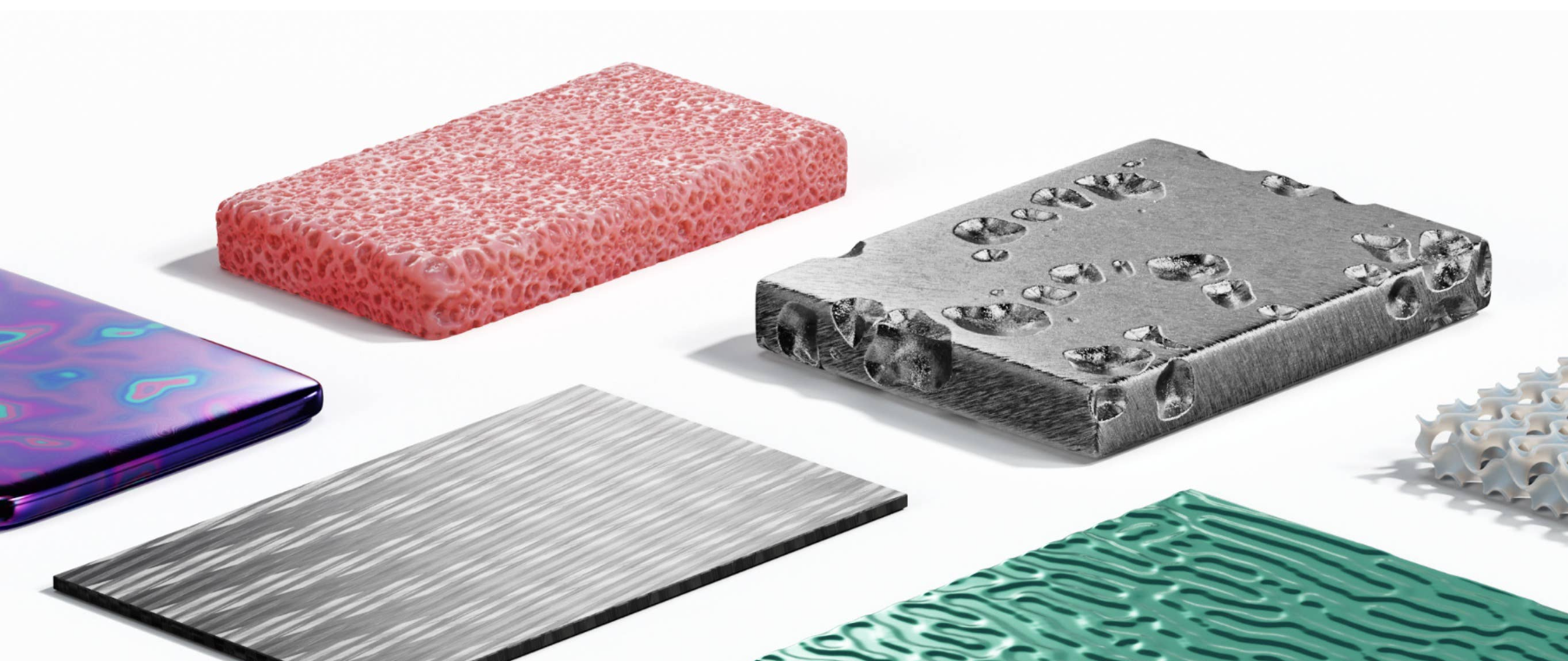
That philosophy is brought to life in Birmingham, where Dent will arrive not only with slides but with a tightly edited collection of 45 physical materials, each selected as a working example of where packaging innovation is genuinely advancing (A15 Hall 2). This is not a catalogue of speculative concepts or distant R&D; it is a practical, global snapshot of materials and processes that are already being used – or are ready to be used – to rethink packaging performance and sustainability. The selection spans new and evolving plastics, advanced paper and pulped fibre systems, lightweight protective structures, and ingenious closures and formats, illustrating how much progress is being made not just through new substances, but through smarter processing and design thinking.
As Dent is keen to stress, “Often it’s not about inventing a brand-new material from scratch. It’s about taking an existing chemistry or fibre and pushing it further – changing how it’s formed, coated, printed, or combined – to get better performance with lower environmental impact.”
Starting with substance
Crucially, Dent believes material thinking must happen early. “As early as possible. The earlier the better,” he says. Too often, packaging design begins with form rather than function. “There’s this knee-jerk reaction to say, OK, we need to design this box. Well, maybe it doesn’t need to be a box. Maybe it can be something else entirely.” Instead, Dent urges designers to interrogate intent.
“What is the packaging trying to do?” Once form is fixed, options narrow. “Once you get to ‘we’ve already designed the box or the container’, it becomes harder, and your range of options diminishes,” he explains. At that point, innovation becomes incremental rather than transformative. “Then it becomes which paper do you use, and the sorts of formats and materials limit you to those papers that are typically made out of.” Early involvement allows a broader reframing. “Rather than looking through ten different papers, maybe we can find an entirely different manufacturing process or an entirely different material type that can still do the same thing but change the look and feel of the experience.”
Regulation complicates this landscape further. Extended Producer Responsibility and other frameworks inevitably narrow material choices. “As more of these regulations come in and they’re enforced, the types of materials that you can or should use necessarily reduce,” Dent says. But he is quick to challenge defeatism. “Constraint breeds creativity,” he notes, adding that regulation often separates surface-level design from real innovation. “The less qualified designers will throw their hands up and say we can’t do anything new. A real creative will then find some way to use those constraints to their benefit.”
Dent is particularly sceptical of the industry’s obsession with entirely new materials. “When did you last see an absolutely new material?” he asks. “They are very rare.” What changes more frequently is how existing materials are processed, manipulated, and applied. “We’re certainly seeing new plastics and new applications for those plastics, whether they are bio-based, biodegradable, or traditional recyclable ones. But what changes more is less the material itself and more the manufacturing processes.” Polypropylene is a case in point. “It’s still the same chemistry, still polypropylene,” Dent explains. “But we’ve seen that material evolve from being a very low-cost commodity to something that can handle high-quality, high-performance design furniture, high transparency, high heat resistance.”
The same pattern applies to pulped paper. “Think about how pulped paper has evolved from egg cartons through to liquor bottles and cosmetic cases. It’s still cellulose-based fibre, but the way we can manipulate it and what we can add to it has evolved significantly.” This continuity is not a limitation – it is an advantage. “If I still maintain my pulped paper, I can still put it in the same recycling location,” Dent says. “It still has the same sustainability profile as long as I’m not coating it too thick with plastic.” By innovating around a familiar base material, brands can maintain recyclability while unlocking new applications. Dent’s views on bioplastics are equally pragmatic. “I would love bioplastic to take over the entire commodity plastic world, but it’s not going to happen,” he says plainly. The issue is not intent, but maturity. “Many of them have not had the development time.”
Packaging, he notes, is unforgiving. “Not only do you have to look good and perform well, but you have to be incredibly inexpensive.” Rather than chasing new chemistries, Dent advocates optimisation. “Let’s find an optimised chemistry, such as PET or PP, and then find a bio-based solution from that,” he explains. “In my ideal world, you’d have a bio-based commodity plastic, PET, PP, PE, whatever it is, and then an effective and efficient recycling system.” He is cautious about materials like PLA and PHA. “They still have significant drawbacks. We know how to optimise commodity plastics, make them bio-based, add biodegradable additives, and put them through recycling streams. That, I think, is the solution.”
Outside plastics, his thinking remains consistent. “We have industrialised paper from trees. Let’s keep using that,” he says. Advances such as nanocellulose and dry pulp processing offer promise, particularly in reducing water use and enabling new forms. “Stick with what we know, optimise it, make sure it fits through a recycling system, and design based upon that.”
For all his technical expertise, Dent’s greatest enthusiasm is reserved for people. “Materials are inanimate,” he says. “They can be beautiful or ugly, but it’s watching the creative experience, the design experience, the engineering experience that excites me.” He describes himself not as a maker, but as a connector. “I don’t make anything. All I do is connect. But it’s good to live vicariously through those who do make things.”
That human exchange – the moment when an idea becomes viable – is what keeps the work fresh. “Because I work in so many different industries, it’s continually new projects all the time. That’s what keeps it exciting.” His message is clear. A single breakthrough material will not define the future of packaging. It will be shaped by better systems, earlier decisions, and a deeper understanding of how creativity, science, and sustainability intersect. Or, as Dent’s work quietly demonstrates, innovation is not about reinventing everything – it’s about knowing what to change, what to keep, and how to connect it all.
Experience the future of packaging for yourself. Join the industry’s leading minds at Packaging Innovations & Empack 2027 and see how creativity, science, and sustainability are being brought to life. Register your interest today.
Share this article


Lorem ipsum dolor sit amet, consectetur adipiscing elit Lorem ipsum dolor sit amet, consectetur adipiscing elit
Latest news from Packaging Innovations & Empack
Lorem ipsum dolor sit amet, consectetur adipiscing elit. Ut elit tellus, luctus nec ullamcorper mattis, pulvinar dapibus leo.