
Lorem ipsum dolor sit amet, consectetur adipiscing elit Lorem ipsum dolor sit amet, consectetur adipiscing elit
Latest news from Packaging Innovations & Empack
Designing for end-of-life: Amy Hooper on turning legislation, data, and waste into levers for better packaging
As policy, economics and public scrutiny redefine what “good” packaging looks like, converters everywhere are facing mounting pressure to design formats that perform across their entire lifecycles. From Extended Producer Responsibility (EPR) and recyclability assessment methodologies to the drive for higher recycled content, what happens to packaging at the end of its life has never been more important.
Beneath the headlines about sustainability, deeper structural questions are coming to the fore. How far should design standardisation go, and where should design freedom remain? What does meaningful innovation look like in a world of tightening constraints and where “novelty for novelty’s sake” can cause real headaches for recyclers and reprocessors? And as AI, data and tagging technologies mature, will brands actually act on the granular feedback becoming available from real-world sorting and recycling infrastructure?
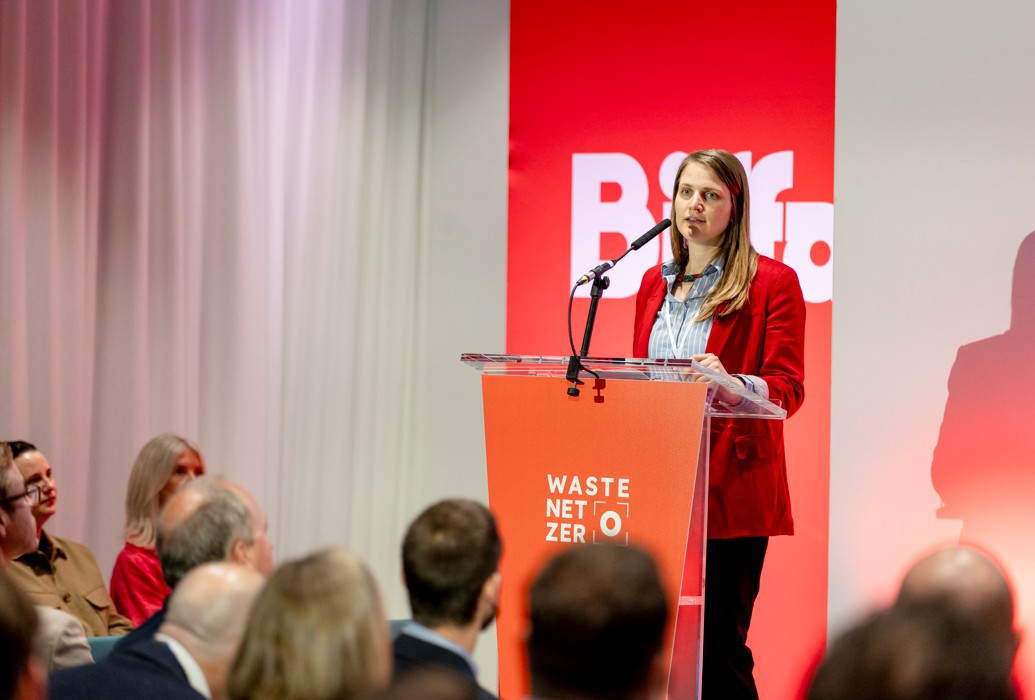
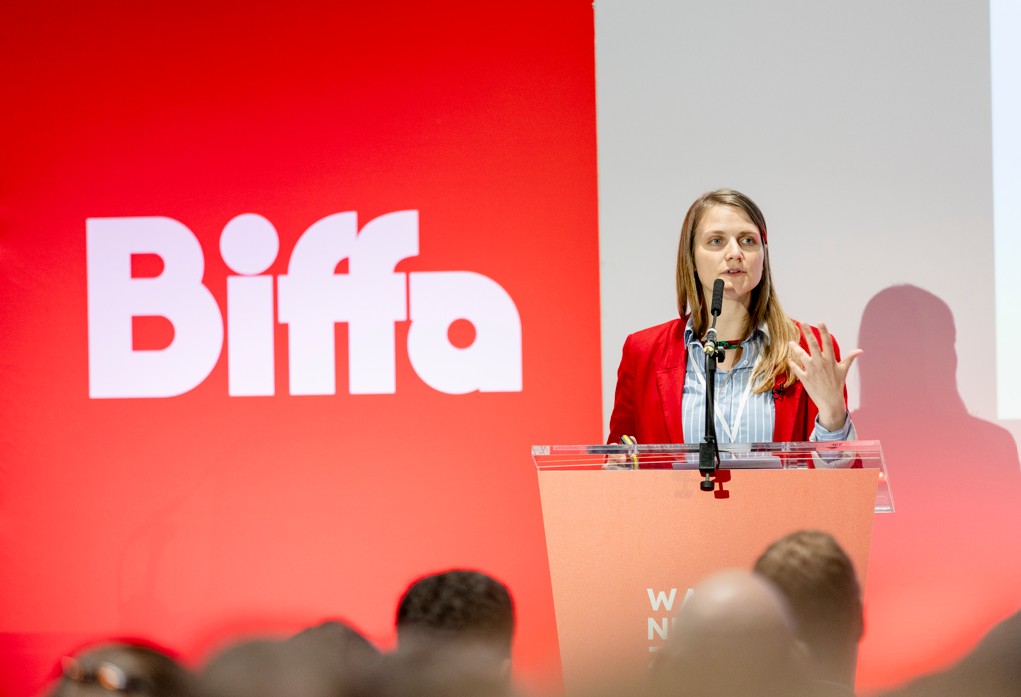
Packaging Innovations & Empack 2026 at the NEC Birmingham is where these questions come under the spotlight, bringing together over 100 speakers, 450+ suppliers and thousands of packaging professionals to explore what circular, compliant and commercially viable packaging really looks like in this changing landscape. Among them is Amy Hooper, Head of Innovation & Sustainability at Biffa, who will challenge visitors to see waste managers not just as a disposal destination, but as essential partners in designing the next generation of recyclable, resource-efficient packs.
Bringing end of life forward
For Hooper, the most important message about designing packaging for circularity is clear. “Whether it’s startups or the government, or NGOs, we really would like people to be thinking about the end of life at the start of life,” she says. From the moment a pack is conceived, designers and decision-makers should begin asking what will happen when it enters the recycling system – how it will be collected, sorted and treated once it leaves the consumer’s hands. As incoming legislation unfolds. This will move beyond being an environmental imperative but also become a financial necessity.
That mindset shift goes hand-in-hand with a reframing of the sector itself. For Hooper, brands need to stop seeing operators as the distant end of the pipe and start seeing them as resource partners. “Seeing the waste management industry more as resource management” is, in her view, essential if brands are to move beyond assumptions about recyclability and test their packs against real-world constraints.
That shift matters because of the different perspectives between the people who make the packaging, and those who deal with it after use. As Hooper puts it, “we might see a piece of packaging enter the market and just think ‘oh my gosh, why have they put that on the market? That’s going to be impossible to recycle.’ But there are lots of reasons for the design of packaging that goes well beyond our expertise – and vice versa.” Closing that understanding gap requires upstream teams and downstream operators to sit around the same table, interrogate trade-offs, and work together on solutions rather than working in isolation.
Hooper acknowledges that while many companies have good intentions for their packaging, achieving the kind of innovation needed for this approach is rarely straightforward. “You put something out there with the best of intentions and then you start to see how the market responds … all of these things need to be tested out and just continually refined. Experimentation and flexibility to enable continual refinement is the name of the game with innovation,” says Hooper.
But she is equally clear that genuine change “requires a full systems thinking approach,” pulling levers across policy, infrastructure design, commercial incentives and consumer behaviour. Those levers include understanding how different waste management companies are configured, how collection, and sorting infrastructure varies by region. It also means improving communication and coordination across the system to ensure alignment on goals, policy, and infrastructure needs to ensure promising innovations aren’t overlooked, and support the development of packaging formats that are compatible with existing capabilities.
AI, tagging, and tightening feedback loops
The panel Hooper will join at the NEC will dive deep into emerging tools that link the design studio with the sorting line. From AI to other tagging technologies, the goal is to give brands upstream visibility of what happens to their packaging in real facilities so they can make any changes they need to.
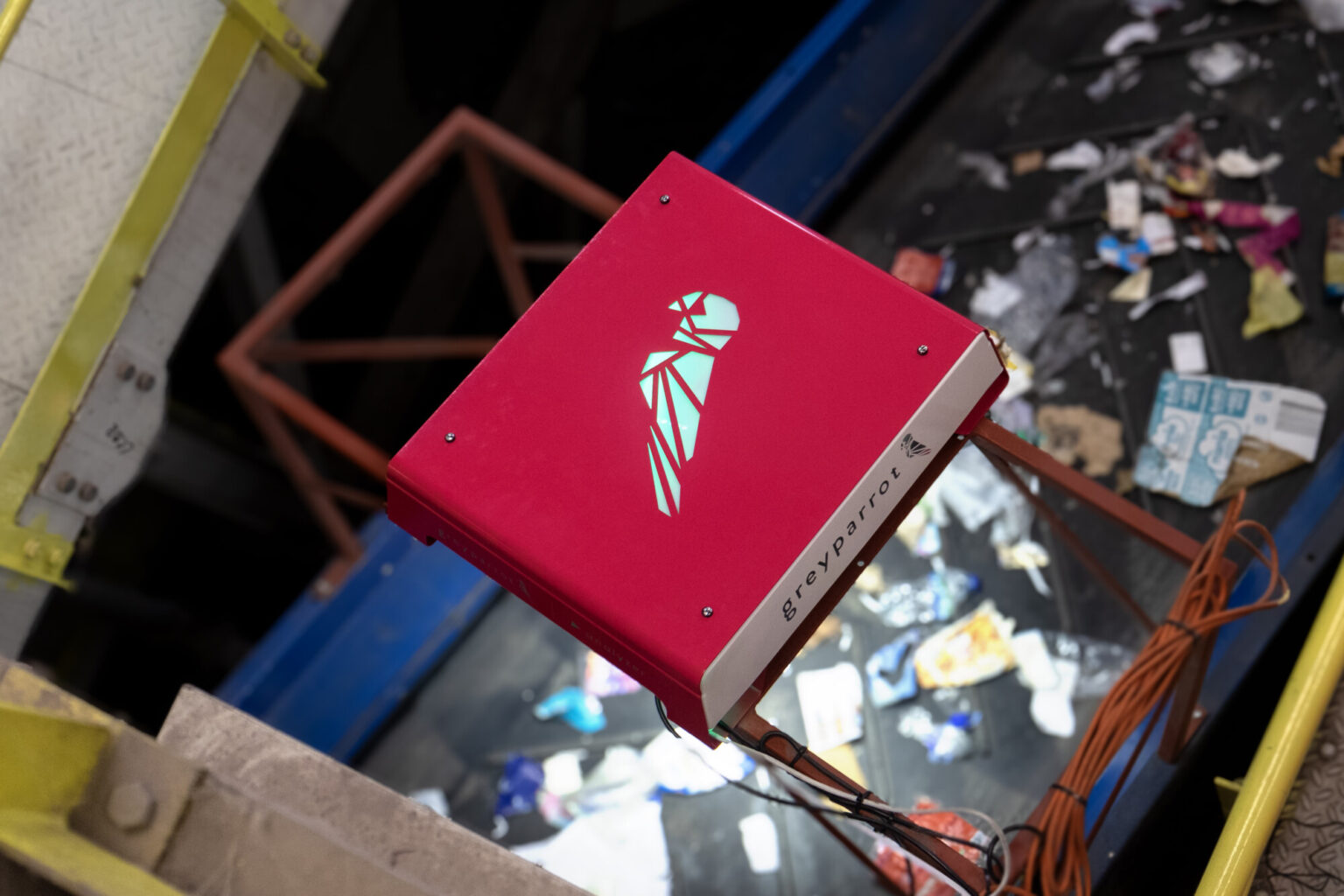
She points to companies like Polytag and Greyparrot’s Deepnest as examples of this new intelligence layer. “Both are trying to make sure that stakeholders upstream in the value chain, , have visibility of what’s happening with their packaging at the end of the stream, so they have data to make informed decisions about packaging design through a better understanding of downstream behaviour and impacts” – a shift enabled by AI systems that can analyse billions of waste items to track sortability, recovery, and loss. For Hooper, the key question is no longer whether data can be generated, but whether it will be acted on if it is provided.
Policy changes
All of this is unfolding against a backdrop of sweeping policy change. From a waste-sector perspective, Hooper likens the implementation of the Resources and Waste Strategy to an incoming wave. A rapid succession of measures like Extended Producer Responsibility have been introduced, all of which are increasing the pressure on the packaging industry
“We’ve got EPR that has come through, and the development of the Recyclability Assessment Methodology (RAM) which is essentially giving RAG (red, amber, or green) status to packaging indicating level of recyclability and environmental impact,” she explains. In theory, “people are empowered to refer to the RAM to decide whether or not something is red or yellow or green and use that to inform areas where design changes may be needed,” but, as Hooper notes, “there are just so many formats and applications with packaging that it can be difficult to create a simplified, all-encompassing outline of the pathway for every single type of packaging.”
In her day‑to‑day role, Hooper is already seeing how EPR is reshaping behaviour. “EPR has got things moving, right? People suddenly have a financial cost attached to what they’re going to do and they’re starting to really see that and go, ‘how do we do this?’” she says. Startups are more routinely coming to Biffa asking, “How can I make sure it runs through your facility? Can I have your certification or validation that it can be sorted?” and retailers are also starting to push for suppliers to talk to waste managers.
But progress is uneven. “In certain cases, companies cannot see a feasible route to make the changes necessary and will just lump the cost of whatever EPR means for them because they can take that hit to put their packaging on the market,’” she cautions, warning that a difficult economic climate risks softening some sustainability ambitions. That makes robust, aligned policy – and clearer links between recyclability, fees and market access – even more important.
Constraint, standardisation, and meaningful innovation
When asked whether there is still too much freedom at the design stage, Hooper doesn’t hesitate. “I might be biased because of my position in that value chain where, for me, the simpler things can be, the more material we can recover,” she says, emphasising that simplicity means more high‑quality recycled feedstock that can flow back to brands, producers and manufacturers.
“In an ideal world, we would have standardisation and it would be enforced, right?” she continues. While brands often worry that standardisation dulls differentiation, Hooper points to research showing “you can still really differentiate even within those parameters. It’s about being creative doing so.” For her, the sweet spot is where “constraints allow you to be much more innovative – but innovative with impact,” backed by routes for genuinely better solutions to challenge and evolve the rules.
Reuse and who moves first
Hooper sees strong parallels between the current debate on recyclability and the emerging conversation on reuse. Biffa’s work on reuse infrastructure modelling with partners such as GoUnpackaged has already highlighted that, under defined conditions, reusable systems have the potential to be technically and commercially viable across retailers, manufacturers, waste managers and logistics operators.
“The GoUnpackaged work did a lot of the heavy lifting in terms of doing the data analysis to say, ‘Here is a business case,’” she explains – but, as with recyclability, the gap now is action: “Now we’ve got the question again where we’re going, ‘OK, well, we’ve got the data – now who is going to turn reusable packaging on?’” In her view, 2026 needs to be the year when reuse moves from slide decks to tangible, scalable pilots in the UK market.

Consumers, claims and simpler recycling
While the industry wrestles with RAM matrices and modulated fees, Hooper believes the next frontier is consumer communication. “The next step, which needs to start this year, is how we communicate with the public about what these changes mean for them so that their behaviours follow as well – so that they’re doing the right thing with packaging,” she says.
She also wants to “crack down on the usage of terminology around biodegradable and compostable and claims about recyclability that aren’t genuine,” noting that inconsistent, absent or misleading claims could undermine trust in recycling in general, and confuse householders just as simpler national collection and labelling systems are being introduced.
Looking ahead, Hooper has a clear wish list. “By and large, we want to make sure that recycled content is used more than it is currently and that it’s cheaper than virgin content. Our plastics recycling industry is struggling. And that’s not great for the circular economy, right?” she says, calling for strong signals in the UK’s forthcoming Circular Economy Growth strategy.
She also wants to see “a coming together of the value chain on the legislation that’s been introduced this year and is coming in the next couple years,” so that everyone is “pointing in the same direction” on goals and then working out the “how” together. Crucially, she argues for safeguarding domestic expertise: “If [the plastics recycling industry] falls through in the UK, that’s a huge loss to world-class infrastructure and capabilities that the UK has worked hard had managed to develop and keep here. In today’s climate of geopolitical uncertainty, safeguarding UK expertise and capacity is becoming ever more critical.”
Learn more at Packaging Innovations & Empack
Hooper is under no illusion about the pace of change. “It’s not fast, I will tell you that,” she says, likening the system to “a vast and intricate web of different ecosystems” where even a small nudge can take years to be felt. “While she recognizes the significant efforts already being made to drive progress, she reflects that “there are moments when you wish for a more unified and bold approach – where a clear course is set and everyone moves forward together with urgency and shared purpose.”
Her session at Packaging Innovations & Empack 2026 offers packaging technologists, designers, sustainability leads, buyers and commercial teams the chance to interrogate these tensions directly – from unintended consequences of lightweighting to the real impact of tagging, RAM scores and standardisation on design freedom and commercial performance. It is also a rare opportunity to explore how authentic collaboration with waste managers can derisk innovation, sharpen claims and turn recyclability from a boxtick into a measurable business advantage.
Join Amy Hooper and over 100 industry‑leading speakers at Packaging Innovations & Empack on 11 & 12 February to explore how policy, data and real‑world infrastructure are reshaping the future of packaging design, recyclability and reuse. Across two days at the NEC Birmingham, you’ll have the chance pressure‑test your strategies, ask difficult questions, and uncover practical ways to align innovation with upcoming legislation and circular economy goals.
Share this article

Lorem ipsum dolor sit amet, consectetur adipiscing elit Lorem ipsum dolor sit amet, consectetur adipiscing elit
Latest news from Packaging Innovations & Empack
Lorem ipsum dolor sit amet, consectetur adipiscing elit. Ut elit tellus, luctus nec ullamcorper mattis, pulvinar dapibus leo.