

Lorem ipsum dolor sit amet, consectetur adipiscing elit Lorem ipsum dolor sit amet, consectetur adipiscing elit
Latest news from Packaging Innovations & Empack
Failure: The hidden engine of progress
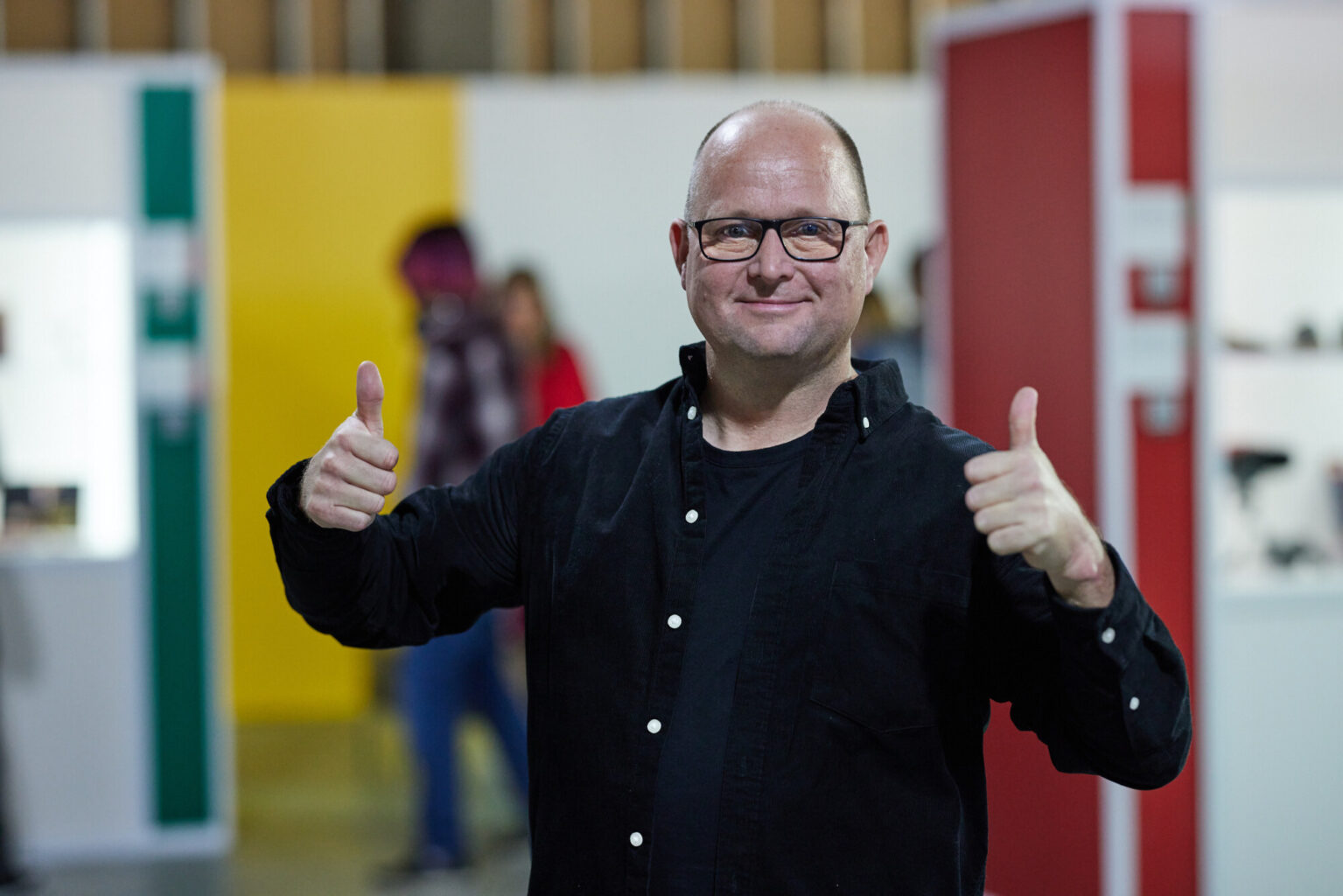
There is a strange beauty in failure, a quiet pulse beneath the noise of success. We live in a world obsessed with measurement, reward, and tangible outcomes, where value is quantified, and mistakes are punished. Yet, progress, the kind that reshapes industries, art, and even life itself, thrives not in certainty, but in the shadow of what does not work. The Museum of Failure, born of curiosity about what goes wrong, reminds us that each misstep is a quiet teacher, whispering lessons that numbers, spreadsheets, and accolades can never convey.
In every human endeavour, whether crafting a product, its packaging, building a company, or simply living, the act of trying carries inherent risk. Boldness is not an innate gift but a choice, a willingness to step forward despite constraints, criticism, or the fear of being wrong. History, evolution itself, is built on countless mutations, countless experiments that failed, vanished, or were ignored. From these failures emerge the forms and ideas that endure. We are the sum of the mistakes that survived only through iteration, resilience, and the courage to continue.
Society venerates the polished, the triumphant, the visible victories. Yet behind every celebrated breakthrough lies a labyrinth of discarded attempts, overlooked experiments, and ideas deemed unworthy at first glance. In innovation, particularly in fast-moving arenas like packaging or technology, the pressure to succeed can be relentless, leaving little room for exploration or risk. And still, some do, those who embrace missteps, who see potential in the discarded, who understand that the path to ingenuity is jagged, irregular, and imperfect. In this spirit, Dr. Samuel West, Founder and Curator of the Museum of Failure, will share these insights at Packaging Innovations & Empack 2026 on the Design & Innovation Stage on Wednesday 11 February, 12:30–13:00. His talk, “Innovation Needs Failure,” explores how setbacks in the packaging industry can reveal practical strategies and turn flops into fuel for real progress.
When missteps matter
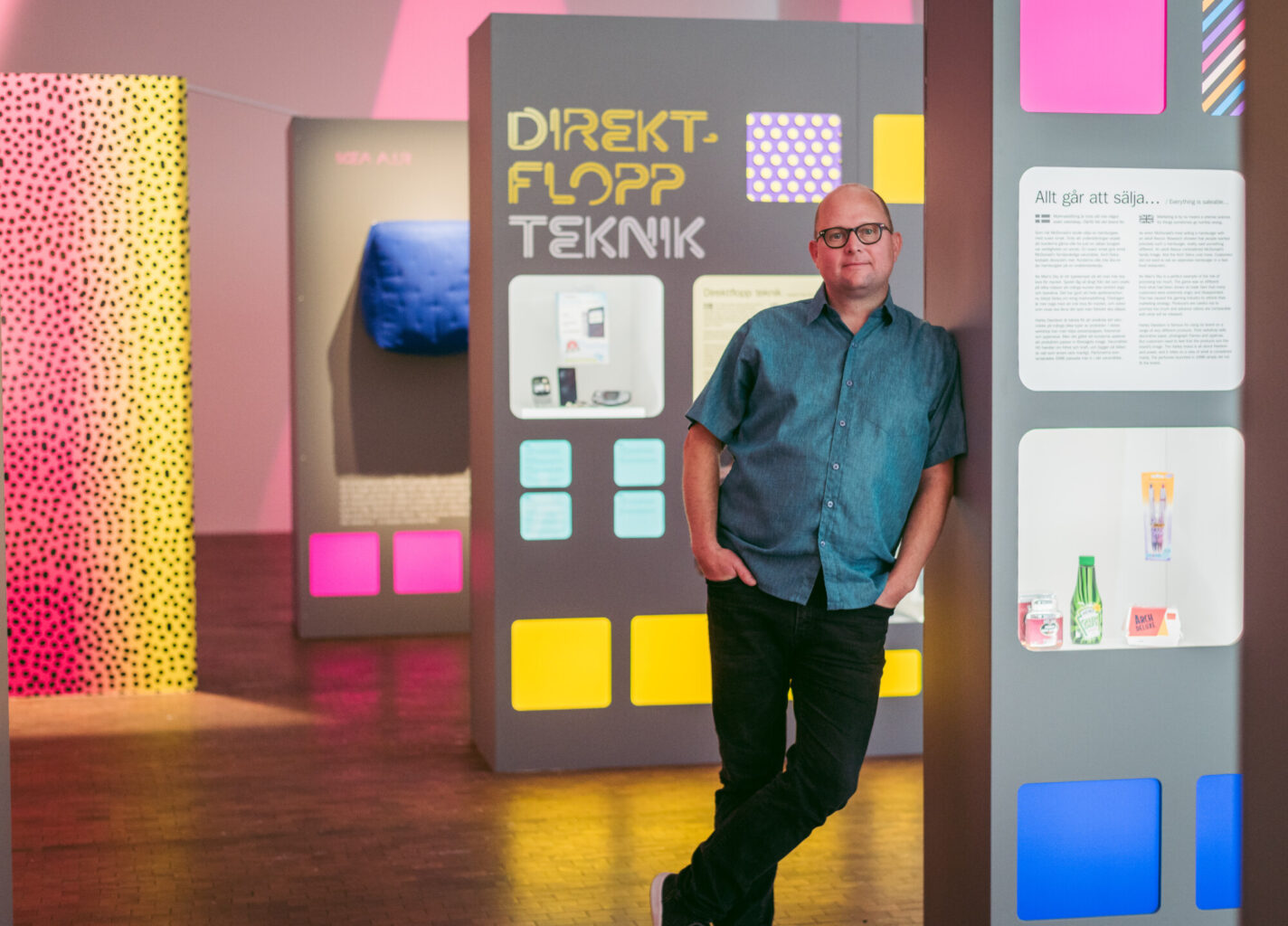
It’s easy to worship success. Our culture celebrates it, immortalises it, and measures worth by it. Yet behind every “overnight” triumph lies a long trail of missteps, miscalculations, and outright failures. Samuel has spent the last eight years exploring this trail, turning the concept of failure into a lens for understanding innovation, creativity, and human progress.
“I started the Museum of Failure based on research into obstacles to innovation,” Samuel explains. “The museum itself has travelled since it opened in Sweden in 2017, showcasing hundreds of failed products, from tech mishaps to corporate flops. The main point is to spark discussion: how do we accept our own failures, and how do we learn from them?”
The museum isn’t just a collection of amusing missteps; it’s a mirror reflecting society’s complicated relationship with failure. “Society worships people who are successful, but the way to get there is full of mistakes and dead ends,” Samuel notes. “We reward the outcomes but penalise the path. That tension fascinates me.”
To engage with failure is not to glorify defeat but to illuminate a deeper truth: that mistakes are not the opposite of progress, but its prelude. In acknowledging our misfires, we create space for insight, courage, and imagination. The Museum of Failure is more than a collection of flops; it is a testament to the human spirit’s capacity to learn, adapt, and persist. Here, in the quiet contemplation of what once failed, we glimpse the blueprint of what might yet succeed.
“If you look at life from a philosophical stance, we’re all here because of countless failures, mutations that didn’t survive,” continues Samuel. “The ultimate failures paved the way for us. It’s the same principle in innovation: experimental trials are essential to creating something of real value.” Samuel often marvels at this parallel: “I sometimes like to think about just the basis for life. Those monkeys and squid and bacteria that preceded us, the mutations are the reason we’re here. The failures are what allowed evolution to succeed.”
Why some dare
Before diving into the mechanics of risk and experimentation, it’s worth considering the lens through which Samuel views failure. His dual grounding in clinical and organisational psychology allows him to see not just the surface missteps, but the underlying human behaviours, cultural pressures, and structural dynamics that shape how we approach, and avoid, failure. It is this perspective that illuminates why some individuals and organisations dare to take risks, while others remain constrained by norms, metrics, or fear of social and professional consequences.
“It could be argued that success might happen by pure chance,” he says, “but we both know that’s not enough. You need deliberate trials, learning, and reflection. Even evolution itself is a continuous process of failed experiments.”
This human instinct to take meaningful risks, even in the face of structural or societal constraints, is a thread Samuel observes everywhere. “There’s this human tendency, almost instinctive, to take meaningful risks despite the constraints of corporations or big companies,” he notes. “There’s boldness and courage in that, and I think it’s part of what defines progress.” That courage is subtle, often unnoticed, and rarely celebrated, yet it is the foundation of human creativity and innovation.
Yet, the acceptance of failure varies dramatically across cultures. “In Iceland, California, and the UK, failure is more or less somewhat accepted,” Samuel observes. “But if you look into Far East Asia, you just don’t fail. The shame associated with it is so powerful that you just don’t take those risks. You don’t innovate, and you don’t experiment.” This cultural lens shows that fear of failure is not universal, it is constructed, reinforced, and sometimes exploited by societal norms.
The implications for business, and particularly for industries like packaging, are profound. In a world obsessed with metrics and measurable success, minor improvements are rewarded, and bold experiments are often discouraged. Yet these experiments, fraught with missteps, are where transformative innovation emerges. “Even in the average corporate environment, even the coolest companies, even Silicon Valley or Scandinavian start-ups,” Samuel points out, “the culture still doesn’t reward boldness. The academic setting definitely doesn’t. Just do as you’re told, shut up, and write more papers. Don’t rock the boat.”
Samuel notes that social media and the digital age have only amplified these pressures. “Packaging today isn’t just a physical object; it’s performance on a stage visible to millions online. That visibility amplifies both praise and failure, making the process longer, more complex, and more intense.” Yet, despite the pressures, failure remains essential.

Failing forward
The nuance of failure extends further. “Failure is part of progress,” Samuel emphasises. “The way you deal with it is relevant to how you’ll reach your objectives. It’s not about rewarding mistakes, it’s about learning from them and moving forward.” Seaweed-based packaging that failed in 2005 might be revolutionary in 2026, if technology, context, and consumer tastes align. Revisiting failures, reassessing them in light of changing circumstances, is essential.
Psychological safety is critical in fostering this culture of experimentation. “If there isn’t a sense of safety, where people can admit mistakes without fear, you’ll never have teams or leaders willing to take meaningful risks,” Samuel says. “You’re never going to have an organisation where leadership will own up to their failures if people don’t feel safe to criticise ideas or be fallible. That sense of safety is essential.”
Even in the arts, failure is actively pursued. “I thought about improv theatre,” Samuel reflects. “They don’t just embrace failure, they seek it. Even there, the goal isn’t failure itself, but the act of creation. Embracing failure, even overdoing it, still works because it moves you toward a goal.”
Some sceptics fear that embracing failure will lead to mediocrity. Samuel counters this with precision: “Failure never becomes the end goal. You still have performance measures, targets, and quality standards. It’s how you deal with failure that matters. Avoiding failure is the biggest failure of all.”
This approach to failure is also deeply human. “We’ve become obsessed with measurability,” Samuel observes. “Money, speed, performance, anything we can quantify. Yet we miss the value of words, emotions, and experiences that can’t be measured. Future generations might wonder why we were so fixated on numbers or stock prices.” He likens this obsession to The Little Prince, where a man counts stars while life passes by, a timeless critique of misplaced priorities.
The crucible of creativity
Failure, then, is both practical and philosophical. It is the engine of progress, the teacher of humility, and the laboratory of creativity. “Ultimately,” Samuel reflects, “failure teaches, guides, and is necessary for progress. Avoiding failure, or being afraid of it, is far more dangerous than the failures themselves.”
The Museum of Failure’s exhibitions are designed not simply to display missteps, but to provoke reflection and dialogue. Samuel emphasises that their purpose is to create a space where individuals and organisations can confront the uncomfortable reality of failure constructively. “It creates the whole point, to get people to start asking some interesting questions about their own, how do they accept their own failures, how do they learn from it?” In this environment, failure is reframed not as shameful, but as a source of insight, a prompt to examine assumptions, and an invitation to explore what might be possible through iteration and risk-taking, even in highly technical areas like packaging innovation.
Failure, in its many forms, is not shameful. It is the pulse of human progress, a mirror of our potential, and a call to embrace risk with intelligence, courage, and humility. Samuel’s work, through both research and the Museum of Failure, which will be present at February’s Packaging Innovations & Empack, reminds us: even in our missteps, we find the blueprint for our greatest achievements. To experience these lessons firsthand, join Samuel at his upcoming session, where the Museum of Failure comes alive with stories, discussions, and insights designed to inspire creativity and bold thinking. Visitors can register for their FREE pass to attend and explore how embracing failure can unlock innovation in every field.
Share this article

Lorem ipsum dolor sit amet, consectetur adipiscing elit Lorem ipsum dolor sit amet, consectetur adipiscing elit
Latest news from Packaging Innovations & Empack
Lorem ipsum dolor sit amet, consectetur adipiscing elit. Ut elit tellus, luctus nec ullamcorper mattis, pulvinar dapibus leo.