
Lorem ipsum dolor sit amet, consectetur adipiscing elit Lorem ipsum dolor sit amet, consectetur adipiscing elit
Latest news from Packaging Innovations & Empack
Breaking the cycle: Why circularity needs collective action
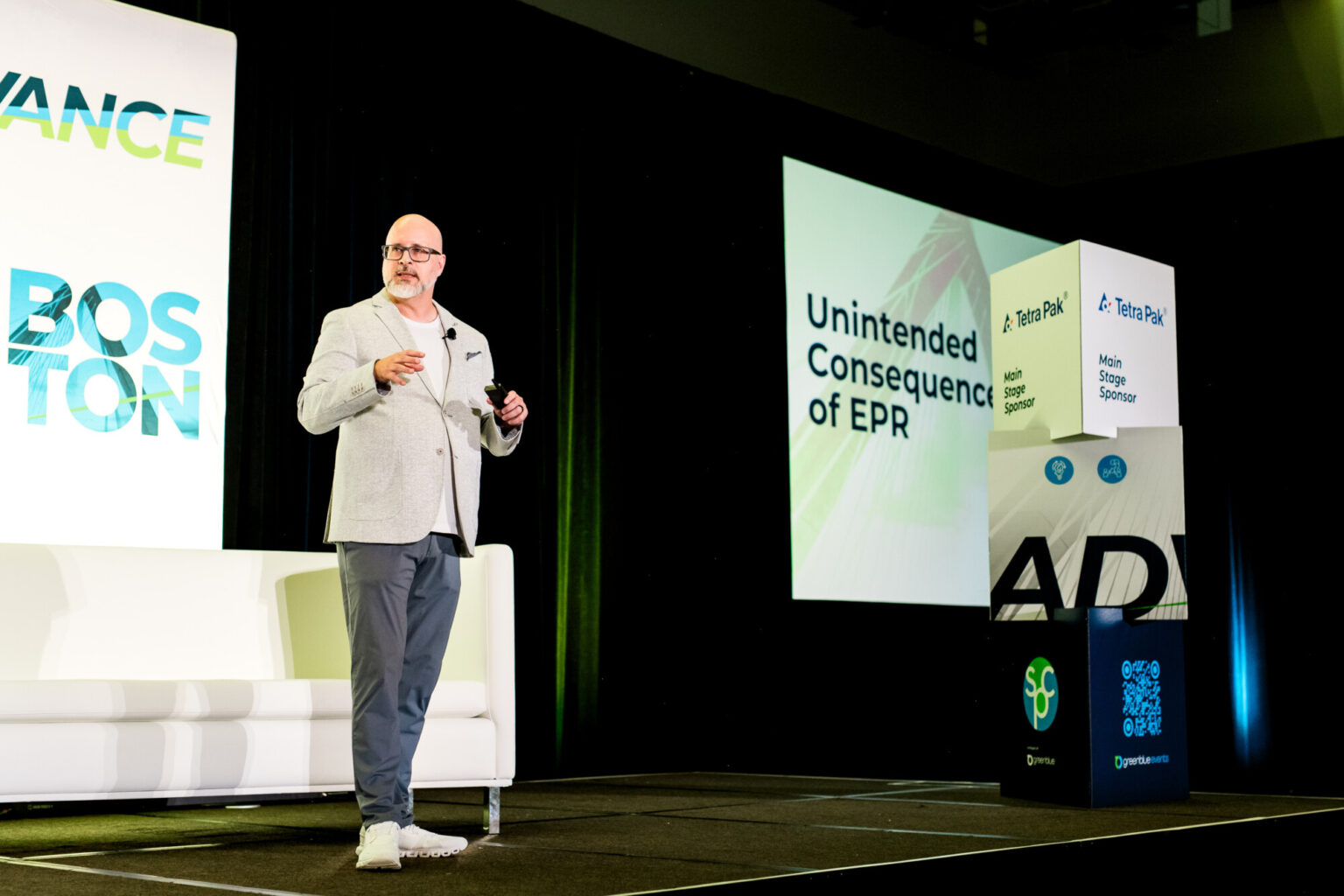
A new era of regulation is sweeping across the US, and for the first time, sustainable packaging decisions are being shaped as much by finance teams as by sustainability leads. It’s a watershed moment, according to Paul: “Nothing else has been like this in the last two or three years. We’ve seen more base-level foundational change than I’ve seen my whole career.”
From voluntary to mandatory: change is underway. What was once a patchwork of voluntary commitments is quickly becoming a landscape dominated by regulatory compliance. As more US states adopt EPR laws, brands are starting to feel the ripple effects, with Oregon having issued it first round of producer fees in late 2025. “You’re going to start to see it hit more seriously in the US,” Paul says. “At the end of the day, these are businesses. They’ve just gotten quiet about it because their heads are down.”
The consequence is a new generation of internal conversations about packaging design, recyclability, and data integrity. “What has shifted is that now you have this new thing in fee schedules that has brought packaging to the CFO’s space, to leadership,” Paul explains.
Rethinking how we work together
At the heart of this change is the role of collaboration. Paul champions GreenBlue’s Sustainable Packaging Coalition (SPC) as a forum where brands, recyclers, retailers, and regulators can have frank conversations about what’s working, what’s not, and what comes next.
“There is a lack of clarity in general in the space as the policies go into effect. That fear of the unknown can be paralysing, but the worst thing brands can do is isolate. Get involved, and push into the fear.”
The SPC’s pre-competitive working groups (SPC Collaboratives) offer a safe, antitrust-compliant space for packaging stakeholders to share data and align on next steps. This includes industry heavyweights and leading converters tackling topics like flexible film recyclability, on-pack labelling, and infrastructure investment.
Packaging Innovations & Empack 2026 will put many of these cross-sector conversations in the spotlight, offering UK and European brands the opportunity to understand what’s unfolding in the US, and consider how it might inform their own strategy.
Data is the new currency of credibility
One message comes through loud and clear in Paul’s comments: data matters. “Data and science kind of set you free. You can have an opinion, but without a data point to back that up, it’s very difficult.”
For the SPC, this means helping members back up recyclability claims with testing, infrastructure data, and on-the-ground consumer realities. Whether it’s the journey of a beauty container through a MRF or the real-world impact of QR codes on consumer recycling habits, the approach is staunchly evidence-first. “Regulatory groups react really well when you show them the data and science,” Paul adds.
Despite the noise around policy, Paul sees real progress in the industry’s response. “Brands are doing the work. They have their heads down. It’s hopeful to me,” he says. Many of the most significant shifts are happening behind the scenes, projects that would have once struggled to make a business case are now being greenlit, driven by the need to prepare for fee structures and futureproof operations. There’s less grandstanding, and more resilience.

Packaging is political, but it’s also personal
Paul also brings a personal lens to his work. After losing his husband of 30 years, he reassessed where he wanted to spend his energy. “You build up a certain amount of knowledge. The question is: how much good can you do with the time you’ve got?”
That belief in doing good through shared systems led to the creation of programs like How2Recycle – the voluntary labelling system now used by more than 800 brands across the US. “People said at the start there’s no way this would work. Twelve years into How2Recycle’s existence, it’s just normal,” he says. “I overlay that to EPR. It feels overwhelming, but you have to take real, actionable steps.”
Paul believes there’s a unique opportunity to build bridges between the US, Canada, the EU and the UK on shared challenges. From test methodologies to consumer insights and on-pack communication, he sees the potential for collaboration across English-speaking markets with similar infrastructure hurdles.
His organisation’s partnership with the UK’s OPRL, inspired in part by How2Recycle, is one example of the cross-pollination already underway. “There are things the US has pushed faster on, like QR scannable data and consumer behaviour research,” Paul notes. “These are insights we’ve been sharing with UK and European groups.”
Packaging may not always be recognised as a STEM field, but it is deeply rooted in science, engineering, and systems thinking. Its small format belies its complexity; a discipline that blends chemistry, materials science, logistics, behavioural psychology and economics. EPR brings this complexity into very sharp focus, challenging businesses to think holistically about the full life cycle of packaging and the real-world systems needed to support it.
Regulatory affairs are set to be centre stage at Packaging Innovations & Empack 2026, making it unmissable for brands and retailers attending at the NEC in Birmingham on 11 & 12 February, 2026.
The event is free to attend and you can register for your complimentary ticket here.
Share this article

Lorem ipsum dolor sit amet, consectetur adipiscing elit Lorem ipsum dolor sit amet, consectetur adipiscing elit
Latest news from Packaging Innovations & Empack
Lorem ipsum dolor sit amet, consectetur adipiscing elit. Ut elit tellus, luctus nec ullamcorper mattis, pulvinar dapibus leo.