Lorem ipsum dolor sit amet, consectetur adipiscing elit Lorem ipsum dolor sit amet, consectetur adipiscing elit
Latest news from Packaging Innovations & Empack
Picked, packed, palletised

Despite being abused in warehouses, discarded in skips, and going unnoticed on articulated lorries, the humble pallet plays an important part in packaging supply chains.
From timber and moulded pulp pallets to films and paper-based solutions for wrapping, exhibitors at Packaging Innovations & Empack 2026 bring palletisation to life with a showcase of what makes them so special.
In a world dominated by automation and AI, it’s refreshing that pallets, a low-fi, legacy technology, remain mission-critical to the high-value packaging industry.
Wooden skids, as used by the ancient Egyptians, are the starting point for pallets as we know them today. They helped with the movement of heavy objects like the massive stones that were used to build the Sphinx and the pyramids.
It wasn’t until the early 20th Century that the modern pallet started to take shape. With the forklift truck patented in 1920, the lift truck platform soon followed in 1924. This development played a huge role in World War II, with the sudden need for faster logistics across the world making the use of forklifts and pallets the de facto choice for the shipment of large goods.
In1961, Euro Pallets introduced specific and uniform dimensions that work for standardised transport. The Euro Pallet remains the staple when it comes to pallet design.
Recently, plastic pallets have accounted for more of the market, although the humble timber pallet remains the most prominent option and shoulders much of the weight when it comes to the needs of the world’s supply chains.
So after more than a century in their current form, what’s next for pallets?
Come 11 & 12 February 2026, a whole host of exhibitors at Packaging Innovations & Empack will be presenting the future of pallets.
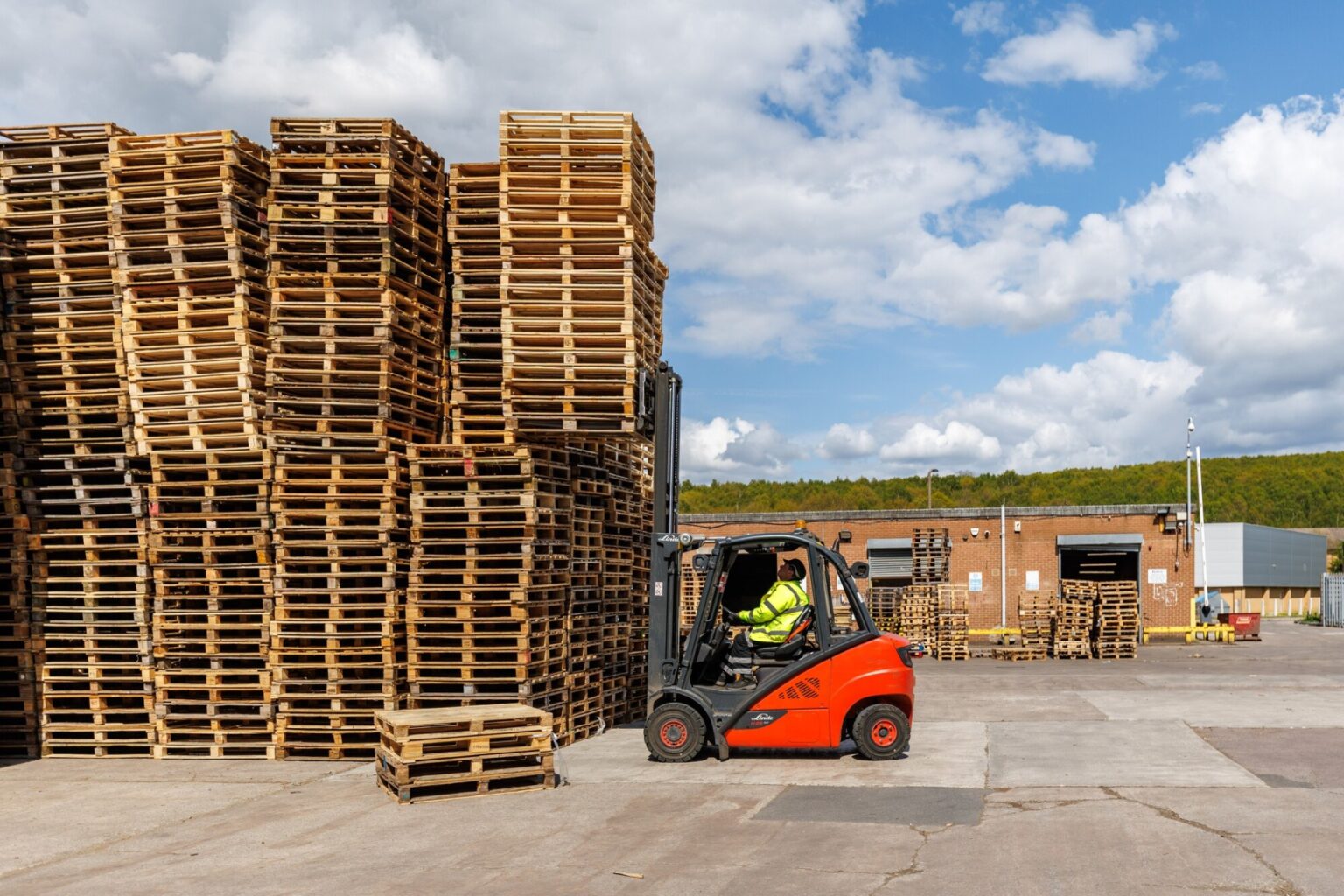
On deck
Since Rowlinson Packaging (R116) started trading in 1966, wooden pallets have been a core element of its business. In 2025, the company uses a high-speed CAPE pallet manufacturing line and Pallet Design System (PDS) to ensure efficiency and quality in every wooden pallet manufactured. As the CAPE line enabled high-speed, efficient production of wooden pallets by utilising automation and robotics, PDS is software that engineers bespoke wooden pallets to precise and specific load requirements. This system scientifically determines the optimal, most cost-effective, and safe design for any given product, weight, and stocking configuration.
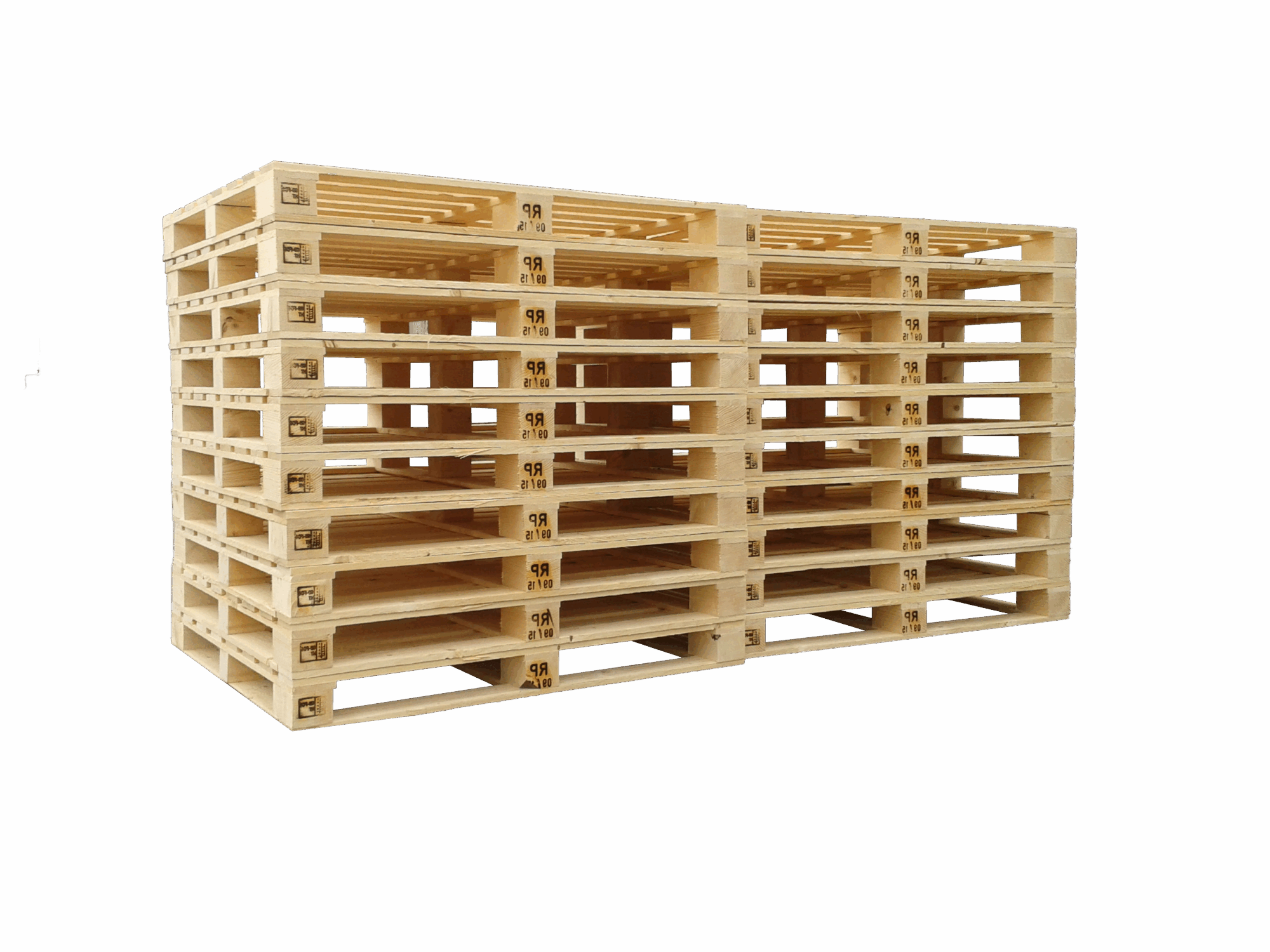
Pallets are then produced from homegrown or Scandinavian imported timber, kiln-treated in line with the International Standards for Phytosanitary Measures No. 15 (ISPM15) and designed and manufactured to be sturdy.
Rowlinson will come and collect any damaged or unused wooden pallets, which are transported to its site in Nantwich and chipped and reused where possible or chipped and/or fed into a biomass boiler to fuel heat treatment.
Scott Pallets (L140) works according to the principles set out in the waste management hierarchy. The company is a leading buyer and seller of used pallets and operates 13 pallet processing centres around the UK, which allow it to optimise the recovery, repair, and reuse of pallets in accordance with the sustainability targets of its customers, as well as the company’s own efforts to simplify and streamline the efficient use of pallets.
This includes The Pallet Loop, an award-winning circular economy initiative that promotes the reuse of pallets in the construction industry, in order to reduce waste and cut carbon emissions. The system works by supplying reusable pallets to building material manufacturers, collecting them from construction sites, and then repairing and re-issuing them for reuse. Customers are incentivised to return pallets, giving the construction industry a simple, circular approach to pallet use.
At the same time, Scott Pallets is a manufacturer and supplier of new timber pallets. From whisky to construction, packaging to chemicals, new pallets are used by businesses in every industrial sector to safely and sustainably transport goods throughout global supply chains.
A strategic national network of well-invested manufacturing facilities produce Euro Pallets, ISPM15 pallets, and pressboard pallets.
Pressboard pallets are made from sawdust and reprocessed recycled wood chips. The glued shavings are compression moulded under pressure and high temperatures to form dimensionally diverse and accurate wood composite pallets. This results in a natural wood finish with a clean and smooth surface and hard, finished edges.
Pallets made from cardboard are another sustainable option, such as those offered by Inter-Pack (H154). These are made from 100% recycled paper, meaning there is no need for fumigation or pest control as is required with timber pallets. A strong and lightweight construction makes them suitable for exporting as they are up to 20kg lighter than a wooden EPAL pallet and up to 1000kg of additional weight can be loaded onto each truck carrying cardboard pallets.
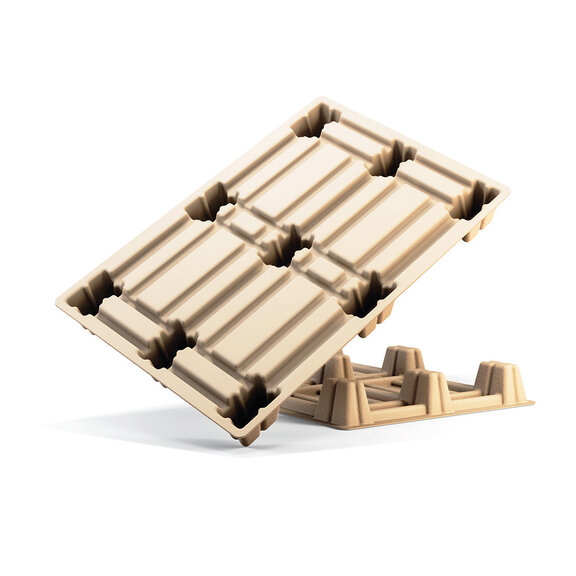
Moulded pulp pallets from Pulp-Tec (L146) are made from 100% recyclable and biodegradable moulded pulp. They are suited for a variety of industries and offer superior strength, durability, and environmental credentials.
Moulded pulp pallets can be used in cold (as low as -20°C) and hot (up to +80°C) environments, will carry a maximum load of 300kg, can be stacked, are IPPC compliant, and can be easily disposed of in commercial waste paper recycling streams.
Safety is the priority for Engels (W100) and its range of plastic pallets that are rated as ESD-safe. Electrostatic discharge (ESD) is a natural occurrence, which can have catastrophic consequences if it occurs in a hazardous environment. Regular plastic pallets, for example, create friction and can generate static electricity. The product on the pallet may be damaged or pose an explosion risk, as the smallest of sparks released by an uncontrolled electrostatic discharge can detonate hazardous gases, powders, or liquids. It can also damage circuit boards found in all types of electronic equipment. ESD protection pallets are made from conductive plastic that dissipates static electricity in a controlled manner.
All wrapped up
Once you have the pallet in place and the product picked and packed, next comes palletising. This is a highly repetitive task when handled manually so has been highly automated with the use of robotics.
This has resulted in a reduction in employee workload and fatigue and an increase in quality and safety.
Raruk Automation’s (U150) Robotiq AX Series and PE Series robotic palletising solutions have been developed to meet the needs of companies providing essential goods in lower throughput applications, with frequent changes of task and box or pallet size.
Both systems can handle a wide range of box sizes, shapes, weights, packaging materials, and can adapt to frequent changes in box dimensions. Small footprints for both mean robotic palletising systems will fit into tight spaces within existing floor plans.
An intuitive interface and intelligent software make it easy for anyone to operate these systems, while the software optimises trajectories to maximise speed & payload capacity and achieve the highest throughput.
OnRobot (U100), the provider of hardware and software solutions for collaborative robot (cobot) applications, offers a number of Off-The-Shelf Solutions powered by D:PLOY. These are designed to make automation accessible, flexible, and effective for manufacturers of all sizes. This includes the compact StackSmart palletising line that features a robotic arm and gripper that handle up to 10 boxes a minute and stack to a maximum pallet height of 2.2m. The maximum box payload is 10kg.
The real benefit of StackSmart is its fully modular design and flexibility that allows the system to be upgraded and easily relocated as production requires. The base features a built-in screen from where all palletising patterns are directly created and executed. Whilst designed to provide a sturdy and compact structure for stability and optimum performance, the base folds for easy transportation, allowing the equipment to be relocated quickly and efficiently, saving time and minimising downtime.
Once palletised, wrapping is the next important part of the pallet process. Without this step, goods and products are likely to move and become damaged.

This is another area of palletisation that has been highly automated. Semi-automatic turntable stretch wrappers and fully automatic stretch wrappers from Yorkshire Packaging Systems (YPS) (S100) accept any pallet width, including Euro and CHEPS. They can handles stretch up to 300% and have a superior build quality along with film carriage safety stop and automated infeed and outfeed process, which ensures high-quality wrapping. High speed performance with a dual rotation option is available for fully automatic models.
PowerWrapper from Wessex Packaging (V90) is a range of semi-automatic pallet wrapping machines engineered to deliver an affordable and effective way of wrapping pallets.
At the top end, PowerWrapper1100 is a high quality, high volume semi-automatic pallet wrapper. This machine has the capability to wrap 20-40 pallets per hour. A patented lower noise turntable makes for an improved working environment.
The PowerWrap range of stretch film from Wessex Packaging represents a new-generation of nano films that are made up of multiple layers of polymers. These polymer layers are selected, blended, and then extruded to create a nano film that is designed for optimum hold force, tear resistance, and to ultimately be much stronger, and lighter, than older specification films.
The results are enhanced load stability, which reduces returns and damage; reduced wrapping film use; improvements in operational efficiency and the number of pallets wrapped per hour and day; and more efficient wrapping that reduces the reliance on precious resources.
For those looking for a manual pallet wrapping solution, the iWrap Hand System from Acopia (V13) is designed with ergonomics and sustainability in mind. Built using Acopia’s iWrap EcoCore, which is a high-performance pallet wrapping solution with a smaller core to reduce waste without compromising strength or efficiency, the patent-pending iWrap Hand System is a lightweight carbon-fibre pole dispenser designed for effortless, ergonomic use with a focus on reducing workplace injuries and waste.
The dispenser is complemented by the iWrap Hand Wrap high performance pre-stretched film that is just 5 microns thick, made from 30% recycled content, and achieves excellent load stability due to its tensile strength.
Carlton Packaging (H140) has developed the wrapX 500 dispenser with an ergonomic, lightweight carbon fibre frame that reduces fatigue, risk of injury, and operator strain, all while enabling faster wrapping. Adjustable locking tension control and quick tension release maximise film usage and guarantee consistently effortless wrapping. A core locator enables quicker and easier roll loading and an integrated floor stand protects the roll from damage when not in use.
To go with the dispenser, the wrapX 500 Elite film has a 500mm width that reduces pallet revolutions by 25% against a 400mm width film and takes half the time to wrap a pallet when compared with a 400mm standard 9 micron pre-stretched film.
wrapX 50 Elite is made from a high performance LDPE blend that increases load stability with reduced film usage. Up to 100% stretch is possible, achieving maximum roll yield. This film is made with 30% recycled content and is available in clear, black, red, and blue.
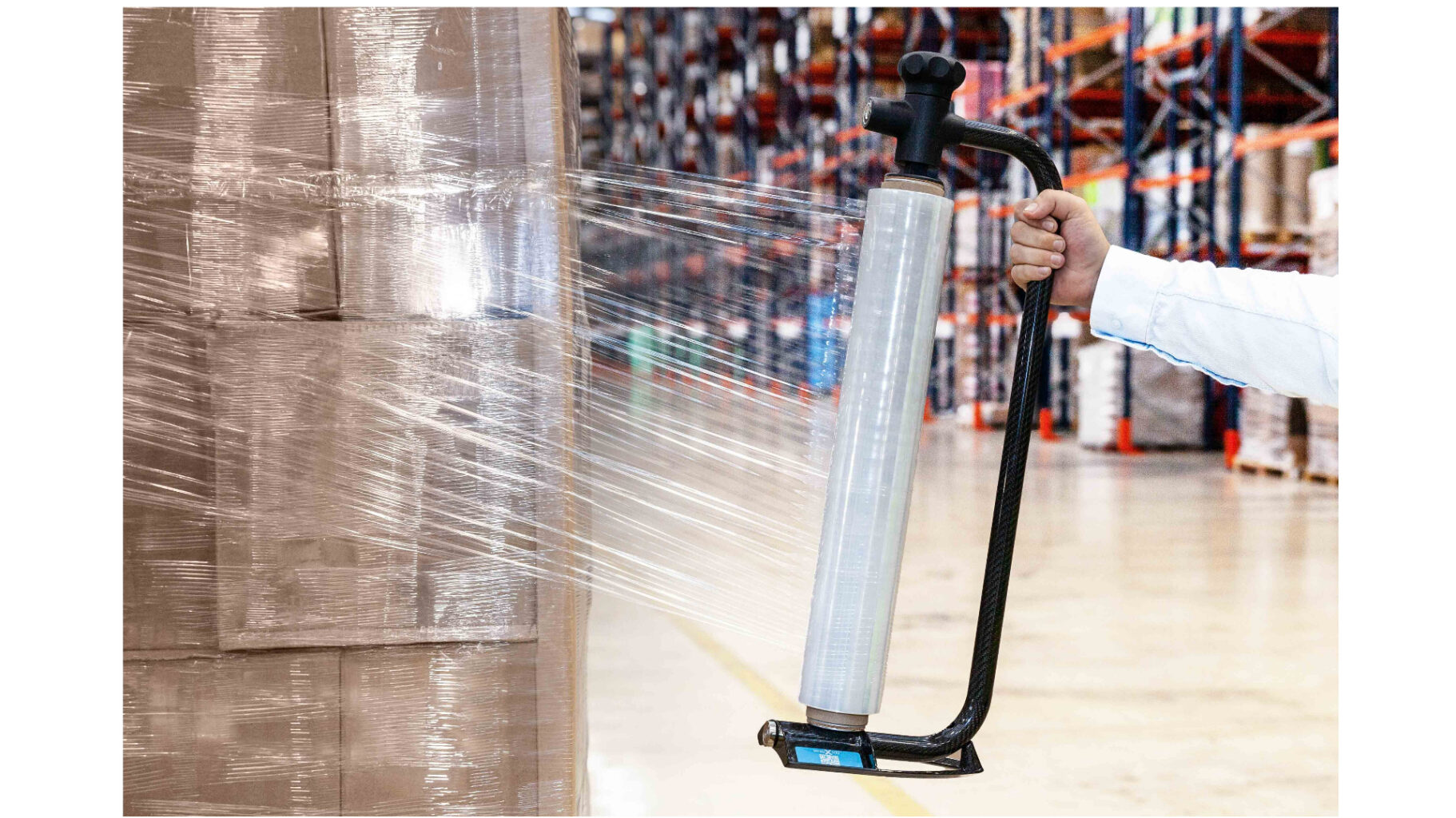
Mondi (E30) is revolutionising pallet wrapping with Ad/Vantage StretchWrap as a replacement for plastic stretch film. This material is made from 100% Nordic fresh fibres and contains no plastic or coating. It achieves outstanding stretch (11%) and has excellent strength and tension absorption. These features make it a reliable, lightweight wrapping solution for products transported on pallets. The solution is machine-ready and compatible with fully and semi-automatic wrapping machines.
Finally, anti-slip paper sheets from Eren Ambalaj (C86) are a reusable and recyclable alternative way of keeping goods in place and reducing the number of accidents in the workplace, as well as preventing damage to goods. Whilst they don’t remove the need for wrapping entirely, they can reduce the need for plastic stretch wrap by as much as 70%.
With so much going on around pallets to maintain their place in the supply chain, it’s easy to understand why they will be a prominent part of the Packaging Innovations & Empack 2026 experience for so many visitors.
Join them by registering for your free ticket here, which grants you access to both days of Packaging Innovations & Empack 2026 when it takes place o 11 & 12 February next year at the NEC in Birmingham.
Share this article

Lorem ipsum dolor sit amet, consectetur adipiscing elit Lorem ipsum dolor sit amet, consectetur adipiscing elit
Latest news from Packaging Innovations & Empack
Lorem ipsum dolor sit amet, consectetur adipiscing elit. Ut elit tellus, luctus nec ullamcorper mattis, pulvinar dapibus leo.