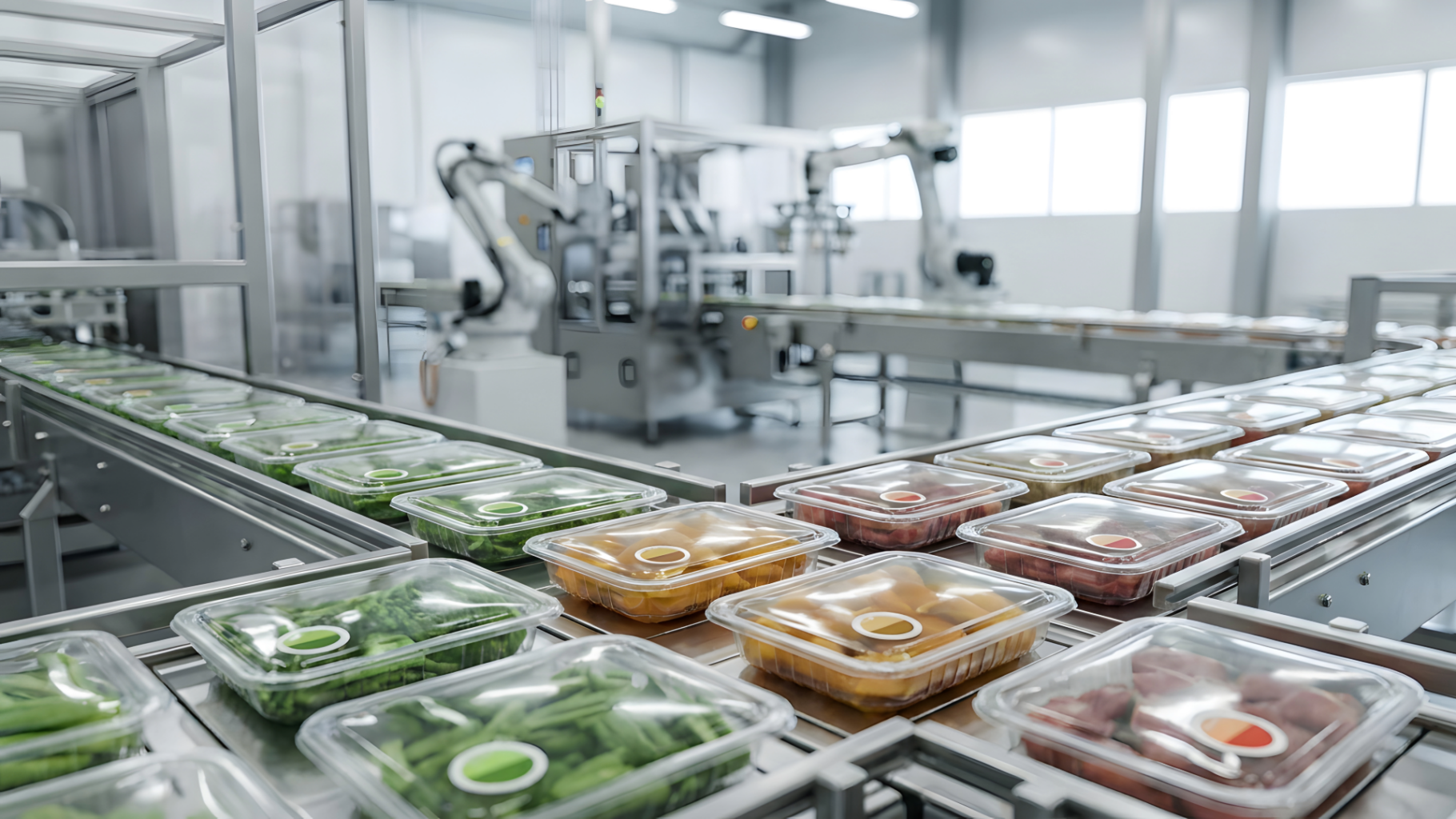
Despite the growing use of automation across the food and beverage industry, many food-to-go products are still packed and palletised manually. With tight margins, short shelf lives and demanding delivery schedules, manufacturers face increasing pressure to make production more efficient without losing flexibility.
Targeted automation could offer a way forward, helping manufacturers streamline operations and respond to changing customer demands without investing in a completely automated production line.
A growing market with increasing pressure
Sandwiches, wraps, bakery products, snacks, salads and protein pots have become everyday purchases, sold across supermarkets, convenience stores, coffee shops, bakeries and fast-food outlets. As demand grows, manufacturers must find ways to keep pace.
Food-to-go accounts for nearly 24% of UK eating and drinking-out occasions. Lumina Intelligence forecasts growth of around 3.4% in 2026, with the market expected to reach £24.9 billion. Average spending per visit has also risen to £12.98.
For manufacturers, this growth brings additional challenges. High production volumes, varied products, short shelf lives and rapid delivery requirements put pressure on operations, particularly where packing and palletising still rely on manual labour.
Why flexibility matters more than ever
Retailers increasingly require smaller, more frequent deliveries, often sent directly to individual stores rather than through traditional distribution networks. With businesses looking to minimise waste and reduce warehouse stock, manufacturers must respond quickly to changing orders.
Producing a wider variety of products, preparing them for dispatch and meeting tight deadlines all while managing costs requires efficient, adaptable operations.
Automation could help meet these demands, but investing in an entirely automated production line is not the only option.
Finding the right place to start
For some manufacturers, automation can seem like a significant financial commitment. A fully automated production and packaging line may require a multi-million-pound investment, making a complete overhaul difficult to justify.
A more targeted approach could provide a practical starting point, focusing on areas where automation can deliver the greatest benefits.
Palletising is one such opportunity. Food-to-go pallets can contain products of different shapes and sizes, making them challenging to organise efficiently. Vision systems and machine learning can help identify suitable pallet patterns, while robots arrange products accordingly.
This can improve efficiency, reduce waste and limit manual handling, allowing employees to focus on tasks where human input adds greater value.
Automation without losing flexibility
Speed and consistency are important, but food-to-go manufacturers must also adapt to changing products and customer requirements.
Choosing technology that fits existing operations, rather than redesigning the entire process around a particular system, can help businesses introduce automation more effectively.
Specialist integrators with food-industry experience can help manufacturers identify opportunities, assess their requirements and develop solutions suited to their production and packing processes.
Making the financial case
Cost remains an important consideration when investing in automation. A well-designed project could potentially deliver a return on investment in around two years, depending on the application and the costs replaced or avoided.
Financing may also make investment more accessible. One example compares a hypothetical automated solution financed at £14,000 per month with existing staffing costs of £16,000 per month, illustrating how the difference in direct monthly costs could produce a payback period of around 29 days.
Actual returns will depend on factors such as labour costs, operating hours, throughput, equipment costs, financing arrangements and staff availability.
Manufacturers should also consider the future value of their equipment. Standard palletising robots and established automation technologies may be easier to repurpose or resell than highly customised systems, offering greater flexibility as products and retailer requirements change.
Rethinking the future of food-to-go production
As the food-to-go market grows, manufacturers must balance product variety, shorter lead times and smaller orders with the need to protect margins.
Targeting specific bottlenecks, particularly in packing and palletising, could help improve throughput, consistency and labour utilisation without transforming an entire production line.
The opportunity is not simply about automating more. It is about identifying where the right technology can make the biggest difference, helping manufacturers keep pace with a fast-moving market while maintaining the flexibility their customers demand.