
Lorem ipsum dolor sit amet, consectetur adipiscing elit Lorem ipsum dolor sit amet, consectetur adipiscing elit
Latest news from Packaging Innovations & Empack
Why there’s never been a better time to work in packaging
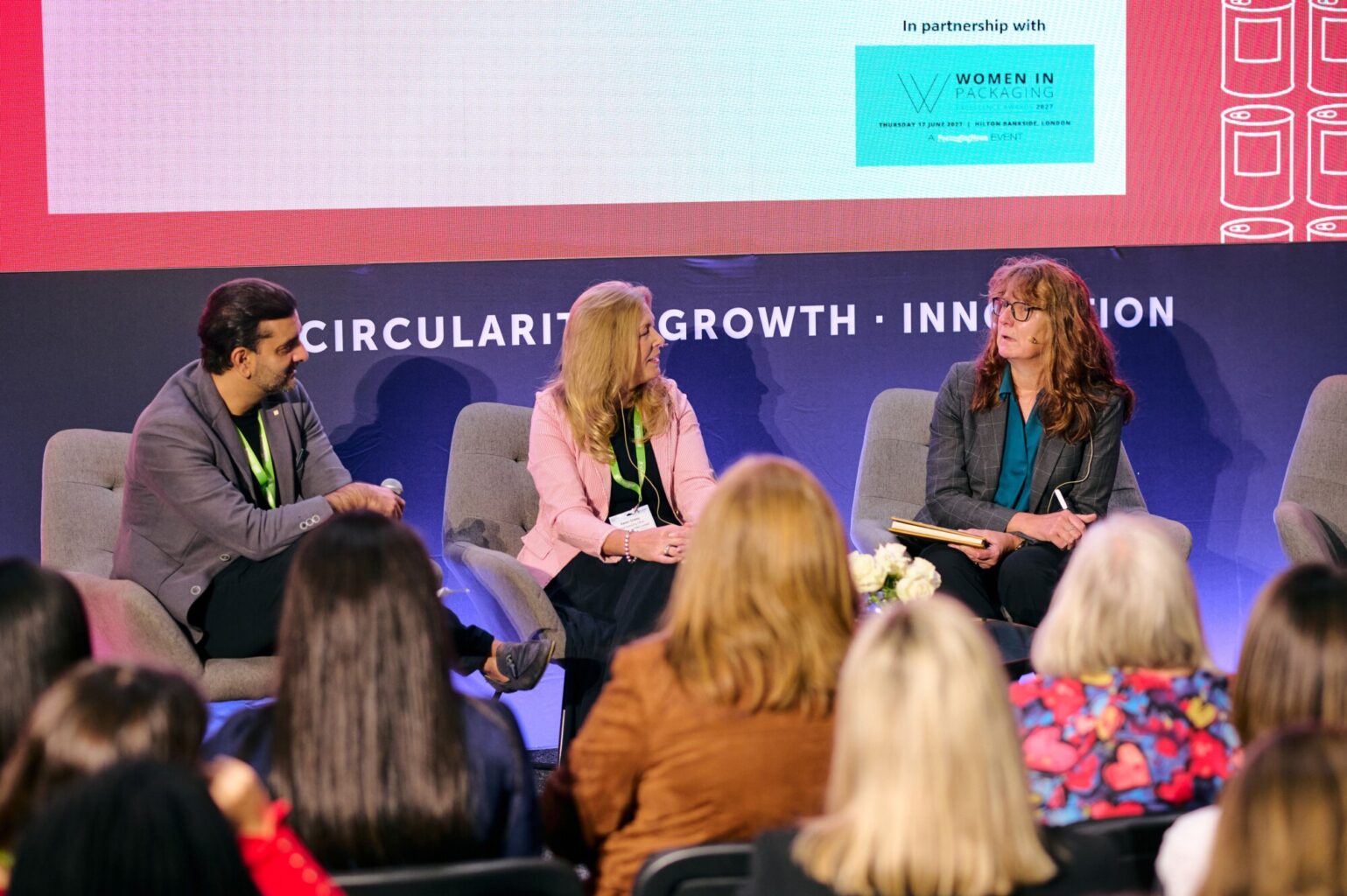
Forget the idea that packaging is simply about boxes, bottles and bags. It is where engineering meets design, materials science meets human behaviour, and AI and automation meet the physical realities of manufacturing and recycling. With some of the industry’s biggest questions still unanswered, the people entering packaging now have an unusual opportunity: to help decide what it becomes next.
Ask a room of children what they want to be when they grow up and packaging technologist is unlikely to trouble the top ten. Ask many successful packaging professionals whether they planned to end up here and the answer may not be much different.
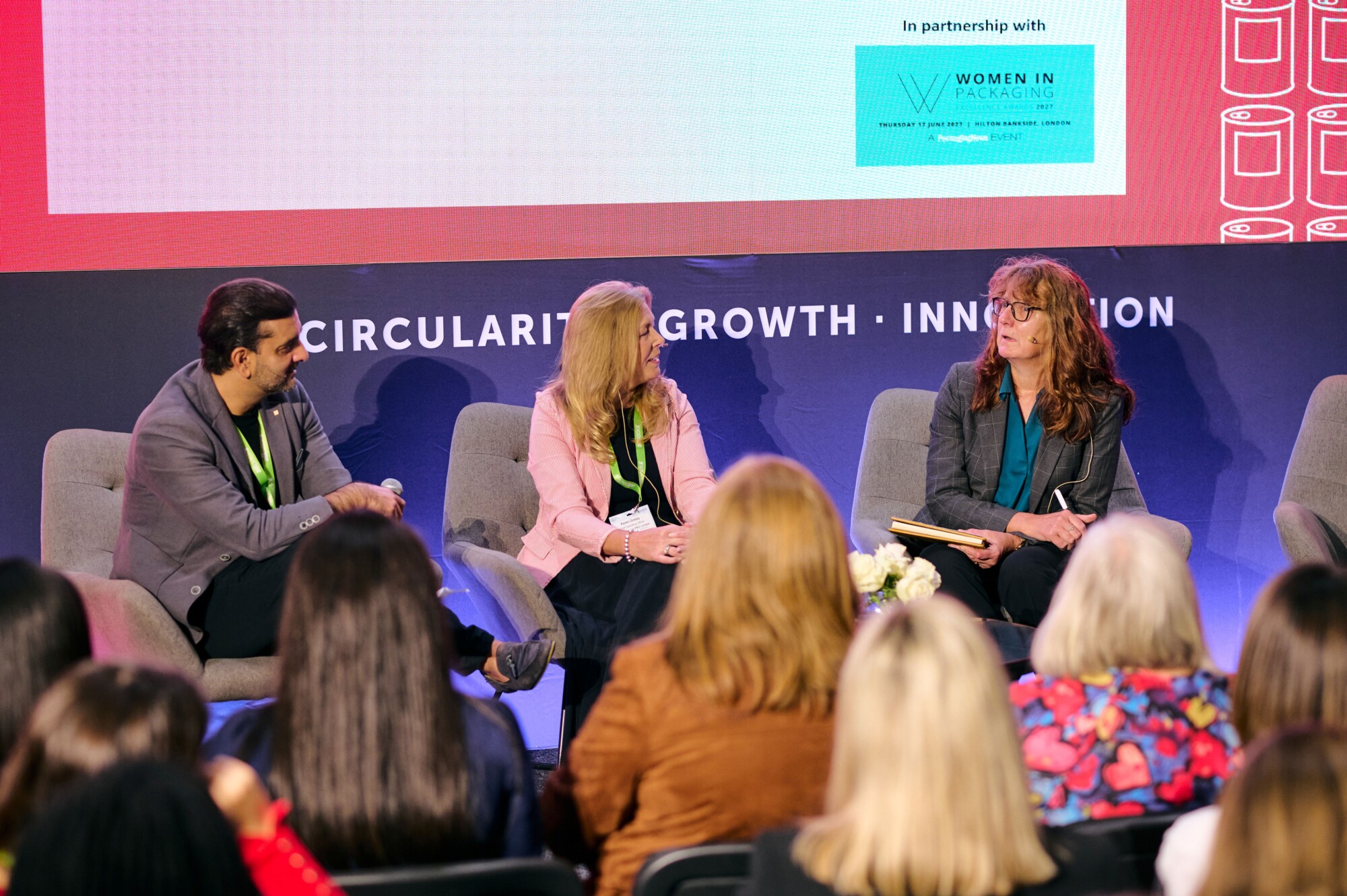
Karen Graley, Chief Operating Officer at UK Packaging PRO, grew up around her family’s silkscreen printing business in Liverpool, but imagined becoming a doctor or police officer. Hüseyin Demir came from statistics and digital marketing before founding Packniche, an AI engine for packaging design and compliance. Margaret Bates spent more than three decades working across recycling, resource management, academia and environmental policy, including a secondment to Defra to establish PackUK on behalf of the four UK nations.
Their routes could hardly be more different, but that exposes one of the industry’s problems: for something that touches virtually everyone’s life, packaging remains remarkably easy to overlook as a career.
“People think it’s dull,” says Bates. “They have no idea of the level of innovation involved.”
Mark Browne, Packaging Lead Europe – Personal Care at PZ Cussons, encounters a similar assumption: that packaging development is mainly about “choosing a bottle, label or carton and making it look good”.
“Packaging development is a systems-engineering job disguised as an everyday object,” he says. “You are balancing materials, manufacturing capability, product compatibility, ergonomics, consumer behaviour, artwork and print, legislation, logistics, cost, sustainability and increasingly data.”
Lisa Cain, European Technical Account Manager at Smurfit Westrock, has spent nearly 40 years in the industry and still finds it difficult to imagine a career offering the same variety.
“I think it’s because I’ve never felt boxed in,” she says. “Packaging has taken me into factories, design studios, retailers, laboratories, customer meetings and production lines all over the world.”
Put on the safety boots
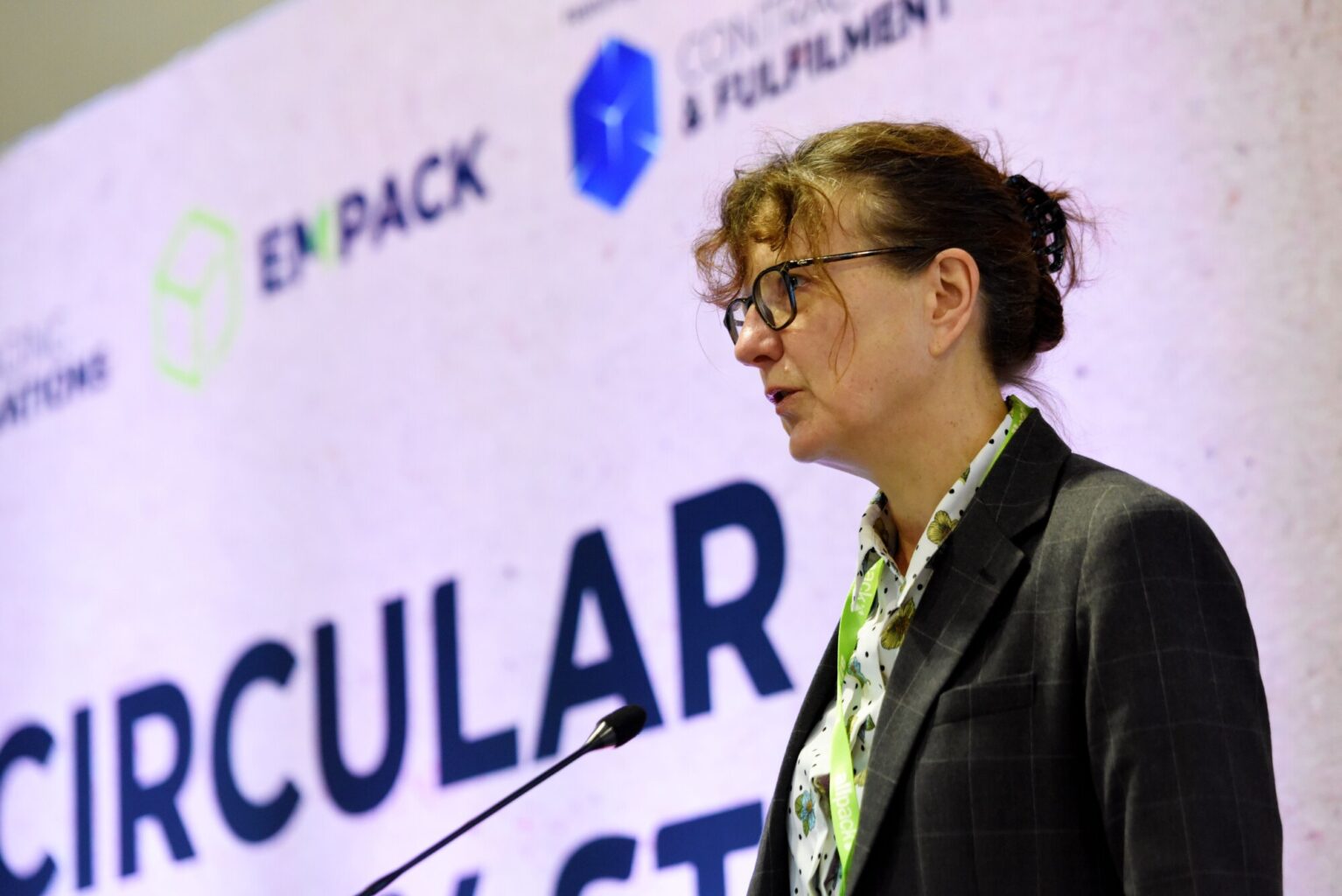
That breadth becomes clearer when Adam Herriott, CRWM MCIWM, Senior Specialist at WRAP, describes packaging from the recycling plant.
“People probably don’t picture someone standing in a recycling plant, trying to understand why a particular pack keeps ending up in the wrong place,” he says. “But that’s part of it too.”
“There’s engineering, materials science, logistics, data and human behaviour involved. I’m interested in whether people know which bin to use, whether the pack makes it through sorting and whether anyone wants to buy the recovered material.”
Graley makes much the same argument from further upstream. Some of her biggest lessons came from walking around a MRF or sitting at a printing press, where “you can touch, you can smell, you can really experience the things”.
However sophisticated the simulation, software or data becomes, eventually something physical has to work. A material has to run through a machine, a seal has to hold, a product has to survive distribution.
That physicality also explains why some people stay: they have made something tangible.
“The thing that makes it cool is being able to point to it in the supermarket or friends and family’s kitchen or bathrooms and say, ‘I did that’,” says Bates.
When the physical world meets the digital one
If packaging remains stubbornly physical, the tools used to understand it are changing quickly.
“When I started looking at this space, testing whether a material or structure would work meant samples, a lab, and waiting,” Demir says. “Now one person with a laptop can model most of that before anything gets made.”
For Demir, the interesting AI story isn’t simply content generation. “It’s AI that can actually reason about packaging rules,” he says. “Packaging knowledge is a strange mix, half materials science, half regulation, and most of it is stuck in PDFs, supplier spreadsheets and the heads of people who’ve been doing it for 30 years.”
Cain sees these developments opening opportunities across the profession, rather than simply changing how existing jobs are done.
“AI, robotics, digital twins and data will all create exciting opportunities,” she says. “At the same time, packaging has become so interconnected that understanding one discipline is no longer enough.”
For Cain, the people who can bring those disciplines together will be particularly valuable. “Packaging technologists who can connect design, engineering, manufacturing, procurement, sustainability and legislation will be in high demand.”

Packaging needs translators
Ask Demir which skills the industry needs more of and his answer is unusual: “Translators, for lack of a better word.”
His concern is that expertise still sits in separate worlds. “Materials people and software people still barely speak to each other, and nearly every hard problem I come across now sits right on that boundary.”
Browne reaches much the same conclusion from inside a major consumer brand. “We need people who are comfortable crossing boundaries,” he says.
Herriott would add another connection: between packaging development and those responsible for what happens afterwards. “I’d like to see more understanding of resource management within packaging teams, and more opportunities for people working in collection and recycling to influence design.”
As Graley puts it: “Packaging’s a team sport and that’s the only way that you can get there.”
It is also why Packaging Innovations & Empack brings together people from across the packaging lifecycle, from brands and designers to materials specialists, machinery manufacturers, technologists and those working in recycling and resource management.
The hardest problems don’t have neat answers
Nowhere is that multidisciplinary thinking more important than sustainability.
Bates identifies one misconception above all others: “The biggest myth is the best packaging is no packaging.” Outside the industry, she argues, packaging can become synonymous with waste, but in terms of sustainability, less doesn’t always mean more. What matters is whether it is fit for purpose.
Take lightweighting as an example. “Removing a couple of grams sounds simple until you consider top-load strength, filling-line handling, labelling, capping torque, palletisation, consumer use and appearance,” says Browne.
Herriott follows that bottle further through the system. “Taking material out of a pack might be a good decision, but you need to know whether more of the product will get damaged,” he says. “And a pack that passes a recyclability assessment may still struggle to get recovered in practice.”
For someone who enjoys solving problems where the answer is rarely obvious, that complexity is part of the appeal.
Eighteen years old, and already changing the pack
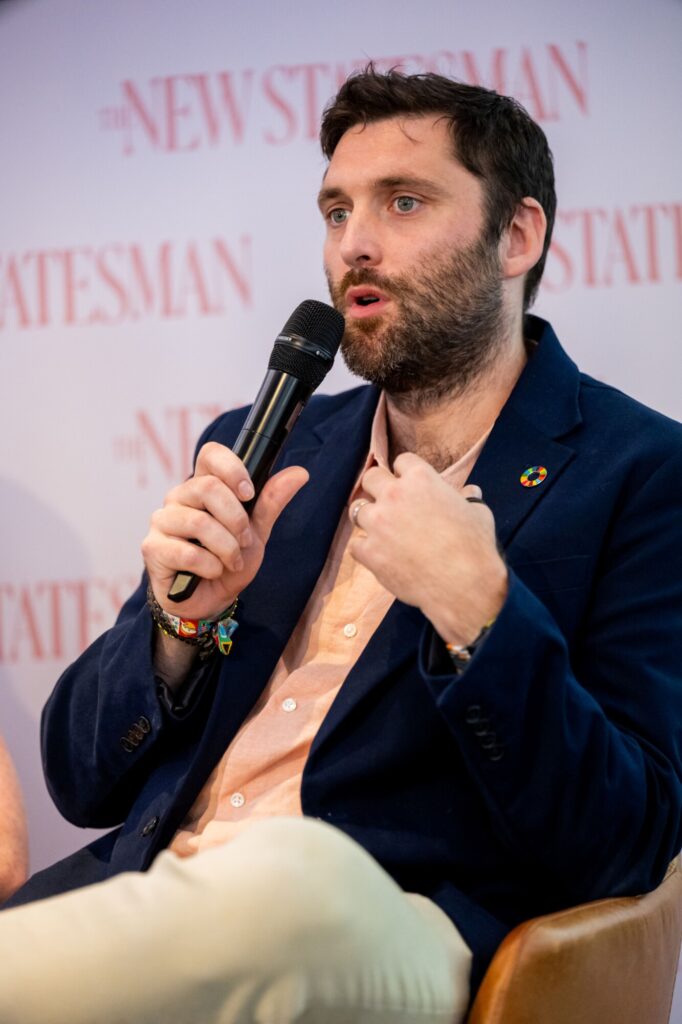
If that sounds like work reserved for people with decades of experience, Browne has a useful counterexample.
“Fresh eyes can often see things us battle-hardened weary guys can’t,” he says.
He recalls interviewing a graduate who had previously undertaken an internship at Müller Dairy. During that internship, the 18-year-old developed a redesigned pack format that the company subsequently adopted for a product launch.
For Browne, the lesson is bigger than one unusually talented young person. “You can make a difference very early. It’s a rapidly evolving industry and innovation comes thick and fast, so there is always some new problem to solve.”
At the other end of a career, Bates has spent more than three decades helping the industry evolve. In 2026, she received the Lifetime Achievement Award at the London Packaging Week Innovation Awards. Yet even after that recognition, she is far from finished.
“I still have a lot to give to this industry, and I hope there will be plenty more opportunities to make a difference.”
It is a remarkable contrast: an 18-year-old whose idea reached the market and a lifetime achievement winner who still sees opportunities ahead. Both speak to an industry where experience matters, but fresh thinking can make a difference at any stage.
Arriving in time to do the interesting work
And there are plenty of problems left.
Reuse systems still need to scale. Regulation is changing how packaging decisions are made, and the relationship between packaging design and recycling infrastructure remains imperfect.
For Bates, that is precisely why somebody entering packaging now can have an impact. “They can actually make a difference,” she says. “Packaging has never been more important in its role to reduce food waste, inform consumers and increase resilience.”
Browne’s pitch to a 21-year-old starts somewhere more familiar.
“Look around you. Almost everything you buy, use, eat, drink or put in your bathroom has had a packaging professional behind it, yet very few people grow up knowing the career exists.”
“If you want a job where you can combine creativity, science, engineering, sustainability, technology and business, and actually hold the result of your work in your hand, packaging is hard to beat.”
Demir offers an even simpler test.
“Pick up anything on your desk. Someone made a packaging decision about it, and there’s a good chance that decision was made on habit and gut feel. Whoever replaces that guesswork with evidence gets to change what ends up in landfill and in the sea, and you’ll see the result within a year, not a decade. That job is wide open and hardly anyone is applying for it.”
You don’t need to have dreamed of working in packaging. You might not even think of yourself as a packaging person. That’s precisely why packaging might need you.
Anyone entering the industry today isn’t arriving after the interesting work has been done.
They’re arriving in time to do it.
Share this article

Lorem ipsum dolor sit amet, consectetur adipiscing elit Lorem ipsum dolor sit amet, consectetur adipiscing elit
Latest news from Packaging Innovations & Empack
Lorem ipsum dolor sit amet, consectetur adipiscing elit. Ut elit tellus, luctus nec ullamcorper mattis, pulvinar dapibus leo.