

Lorem ipsum dolor sit amet, consectetur adipiscing elit Lorem ipsum dolor sit amet, consectetur adipiscing elit
Latest news from Packaging Innovations & Empack
Every legend was once a newcomer. Is packaging noticing its rising stars soon enough?

Sema Tezel Basbug, Head of Marketing at Packaging Innovations & Empack
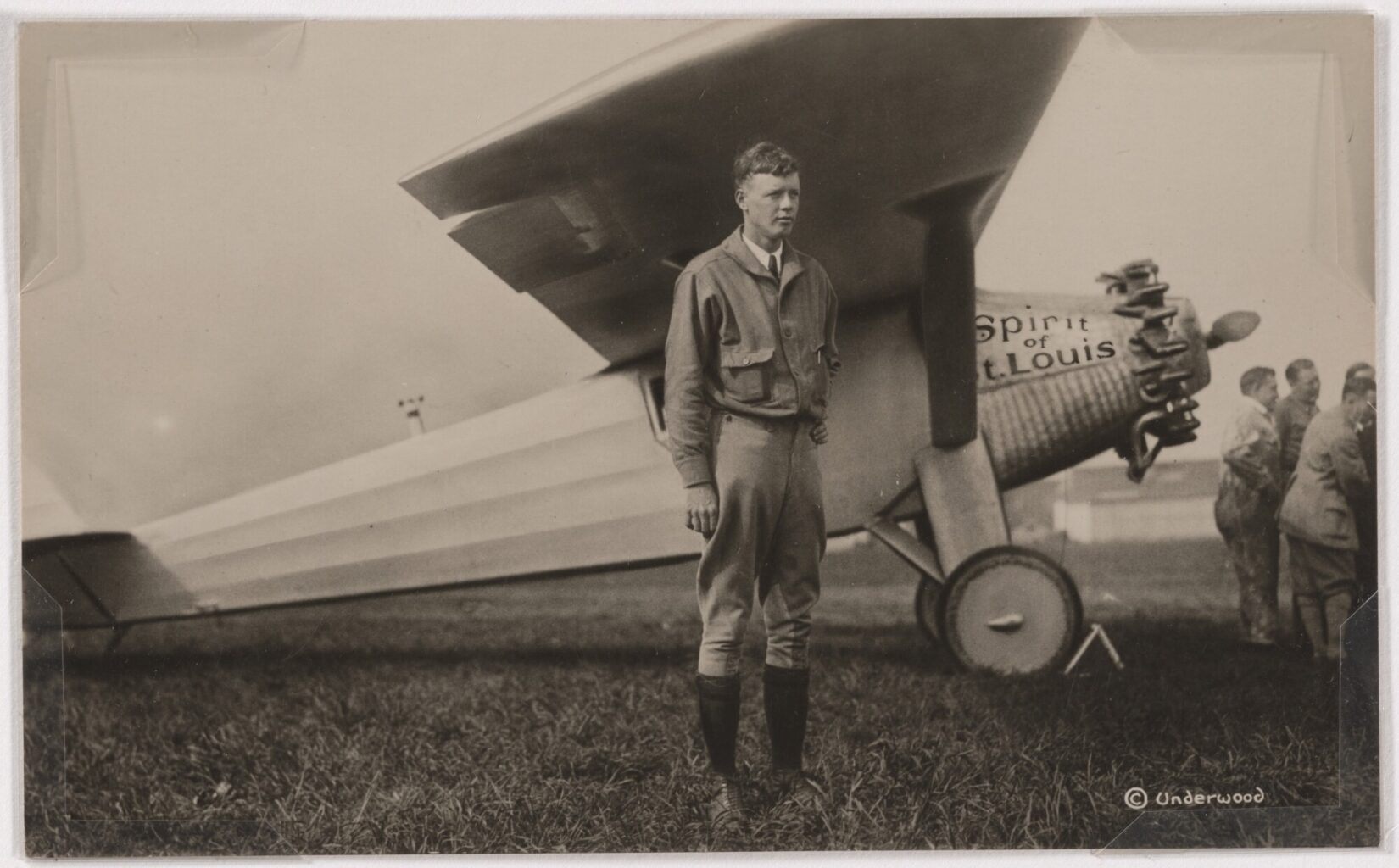
In May 1927, a 25-year-old airmail pilot took off from Long Island, New York, in a small single-engined plane and landed in Paris 33 and a half hours later. Before the flight, Charles Lindbergh was a relatively unknown American. Afterwards, he was one of the most famous people on the planet.
The flight alone didn’t turn him into a legend, the stage did. Eight years earlier, New York hotelier Raymond Orteig had offered $25,000 to the first aviator to fly nonstop between New York and Paris. The prize gave the attempt three things: a story, stakes and an audience. By the time Lindbergh touched down, the world was already watching.
Whether it’s aviation, technology, art, science or otherwise, we tend to think of industry icons as people who were always destined for fame. Most weren’t.
Many were young, early in their careers and largely unknown when they did the thing we now remember them for. What made the difference was that someone noticed, and someone told the story.
Packaging is a case in point, but for the opposite reason. Few industries have shaped everyday life so profoundly, yet few have been so slow to tell the stories of the people behind it. Our industry has never lacked talent with the potential to become legendary. What it has too often lacked is the noticing.
Packaging’s overlooked newcomers
Print and packaging has a long and storied history, stretching from Gutenberg’s press in the 15th century to the paper bags, folding cartons and tins that transformed shopping in the 19th. For a sector that touches almost every product anyone buys, every day, it’s surprising how hard it is to name the people who shaped it. Outside the industry, most people stop at Gutenberg.
The remarkable people are certainly there. In 1871, Margaret Knight, then working at a paper bag company in Massachusetts, patented a machine that folded and glued flat-bottomed paper bags. It’s the reason the grocery bag stands up on its own. She had shown an inventive streak since childhood, but she still had to fight in court to prove the machine was hers after a man copied her design and claimed it.
In 1879, Brooklyn printer Robert Gair noticed that a misaligned metal rule had cut through a stack of paper bags rather than creasing them. He realised that cutting and creasing in one pass could produce cartons at speed. In that error, he had accidentally created the folding carton industry.
Often, the breakthrough came from someone near the very start of their career. In 1944, Erik Wallenberg was 28 and had joined Åkerlund & Rausing as a lab assistant only the year before when he came up with the tetrahedral carton that became the foundation of Tetra Pak. He received little credit for it until 1991, when the Royal Swedish Academy of Engineering Sciences awarded him its Grand Gold Medal, 47 years after his idea.
Packaging innovation has always tended to emerge from the ‘doing’. From labs, production lines and design studios, often from people at the start of their careers, before being absorbed into a company name or a product. The work lives on, but the individual fades from view.

Timing is everything
That habit of forgetting our packaging legends has always been a missed opportunity, but today, it’s a genuine risk.
The packaging industry is changing faster than at any point in its history. The Packaging and Packaging Waste Regulation requires all packaging placed on the EU market to be recyclable by 2030, while Extended Producer Responsibility is rewriting the economics of pack design across the UK and beyond. AI, digital print and new materials are completely transforming what’s possible on the line and on the shelf. Much of the practical work of meeting those challenges is being done by people in the first few years of their careers: degree apprentices, junior technologists, young engineers and first-time founders.
At the same time, the industry needs many more of them. The World Economic Forum reports that 63% of employers see skills gaps as a major barrier to transforming their businesses. When it comes to attracting talent, packaging competes with AI, life sciences, renewable energy and aerospace, sectors that come with famous names and ready-made stories. A school leaver can picture a career in those fields because they can picture a person in them.
If packaging wants to compete, it needs to give young people faces they recognise, and people they can relate to. So what better time to start than now?
Early recognition goes further
Lifetime achievement awards have an important place, but a 17-year-old weighing up their future career options can’t always relate to someone at the end of a 40-year career. They are far more likely to be inspired by someone a few years older, who started exactly where they are now.
That’s the thinking behind the Future Trailblazer Awards at Packaging Innovations & Empack. Rather than rewarding seniority or job titles, the awards recognise people in the first ten years of their packaging careers, judged on what they have changed, improved or influenced. Apprentices and recent graduates are actively encouraged to enter.
The results speak for themselves. In 2026, Olivia Tomlinson won the Circularity Champion award while working as a packaging degree apprentice at Nestlé. A year earlier, Jade Capp of Kingfisher was recognised for problem-solving that included eliminating 56 tonnes of non-recyclable EPS.
These are not stories of potential that might pay off someday in the distant future, they are stories of measurable impact today.
Early recognition also builds over time. By the time Wallenberg was honoured, he was 75 and the moment had long passed. When a young professional is recognised early, that recognition becomes a platform. It’s a reason to speak at events, to be interviewed, to mentor others and to be seen by the wider world.
We’re already seeing that happen. Three former Trailblazers, Josephine Shaw of Unilever, Aden Newbury of Kingfisher and Jess Morgan-Butler of Carlton Packaging, will judge the new Packaging Mentor of the Year award in 2027. Within a couple of years of being recognised themselves, they are helping to celebrate the people who support the next generation. That’s precisely how role models are made, through one highly visible step at a time.

Tell the story while it’s happening
Our collective attempts to give packaging industry heroes a global platform can’t travel far if it stays on a stage in Birmingham. An award is the start of a story, but certainly not the end of it.
That puts a responsibility on all of us. Employers can nominate their people and celebrate them publicly, by name, rather than folding their achievements into a corporate company announcement. Trade media can follow young professionals’ careers beyond awards night. Industry bodies, schools and careers advisers can share these stories with the young people who most need to hear them. And perhaps most importantly, established leaders can put their junior colleagues forward on panels, in press releases and in the rooms where decisions get made.
The Orteig Prize didn’t make Lindbergh a pilot; he already was one. What it gave him was a moment the world couldn’t miss. Likewise, packaging doesn’t need to manufacture talent, it already has plenty. What it needs is more of those global moments, and the confidence to make sure people are watching.
Somewhere right now, in a converting plant, a brand owner’s R&D lab or a start-up, a talented young person is working on something that will change how the world packages its goods for decades. Whether we know their name in 2040 depends on whether someone notices them in 2027.
Entries for the Future Trailblazer Awards 2027 are free and close on 6 November 2026. Anyone in their first ten years in packaging, anywhere in the world, can enter or be nominated by a colleague.
The Class of 2027 will be announced live at Packaging Innovations & Empack, NEC Birmingham, on 24 February 2027.
Share this article


Lorem ipsum dolor sit amet, consectetur adipiscing elit Lorem ipsum dolor sit amet, consectetur adipiscing elit
Latest news from Packaging Innovations & Empack
Lorem ipsum dolor sit amet, consectetur adipiscing elit. Ut elit tellus, luctus nec ullamcorper mattis, pulvinar dapibus leo.